There is a particular kind of cooking that happens when a kitchen is well-stocked with intention, and a particular kind that happens when it isn't. The first produces meals with a quiet coherence — dishes that seem to build on each other, where nothing goes to waste and weeknight dinners feel less like emergencies. The second produces the familiar scramble: mismatched ingredients, a half-used bunch of herbs wilting at the back of a shelf, and a resigned Tuesday delivery order because the pantry simply doesn't have enough to work with. The difference between these two kitchens is rarely skill or budget. More often, it comes down to how the person shopping approached the grocery store on Saturday morning.
Most people enter a supermarket in reactive mode. They move through the aisles in response to what they remember running out of, what catches the eye, and what looks appealing in the moment. The cart fills up, the bill arrives, and the week unfolds with varying results. This approach is entirely understandable — shopping feels like an errand, something to be completed before the real weekend begins. But the word "errand" carries its own assumptions. An errand is dispatched. A sourcing trip, by contrast, is purposeful. It begins before the store, continues through the aisles with a different quality of attention, and shapes everything that comes after it.
The Miseen Place Mindset Before You Leave the House
The French culinary term *mise en place* — literally "everything in its place" — is typically applied to the act of preparing and arranging ingredients before cooking begins. But the same philosophy scales outward, into the planning that happens before the shopping itself. A cook who treats the weekend grocery run as a sourcing trip begins with a loose architecture for the week: not a rigid meal plan, but a set of anchor ingredients around which multiple dishes can be built. A large piece of salmon from Whole Foods, for instance, might serve as a centerpiece dinner, produce leftovers for grain bowls, and inform a broth. That single decision, made before the store, unlocks three meals from one purchase. The preparation isn't complicated — it's a brief, deliberate act of thinking that most reactive shoppers simply skip.
The difference shows up most clearly in what doesn't come home. When shopping is purposeful, the impulse purchases that fill the cart without filling the week tend to fall away. The pre-cut fruit that spoils by Wednesday, the specialty sauce with no obvious application, the second bag of pasta that already exists in the cupboard — these disappear when a shopper is working from an intentional framework rather than navigating by appetite and habit. Purposeful shopping isn't about restriction; it's about alignment between what enters the kitchen and what the week actually needs.
Building Around Anchor Ingredients
A useful concept for this approach is what culinary-minded home cooks call the anchor ingredient — a central protein, grain, or vegetable that can carry multiple preparations across several days without repetition feeling like monotony. Staple grains like farro, freekeh, or good-quality brown rice from a brand like Bob's Red Mill are efficient anchors because they pair across flavor profiles. A whole roasted chicken becomes the base for tacos, a warm salad, and a quick stock. A large bunch of lacinato kale wilts into pasta one night, forms the base of a lentil soup the next, and adds bulk to scrambled eggs on Thursday morning. Shopping for anchors rather than for individual meals produces a kitchen that feels generative rather than depleted by midweek.
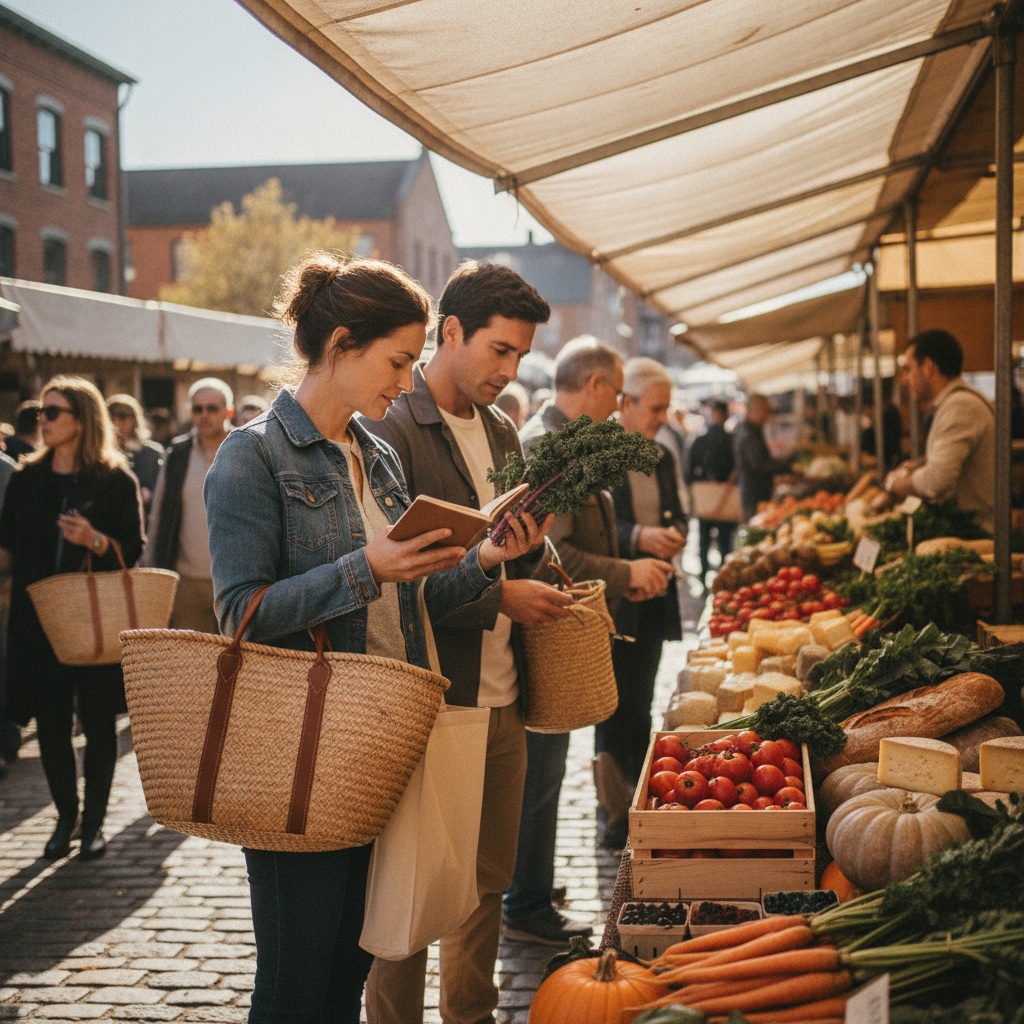
This also changes the relationship with what's available, as opposed to what's planned. A sourcing mindset makes a shopper responsive to what's at its best — the end-of-season squash, the particularly good tomatoes at a farmers market stall in a neighborhood like Portland's PSU Saturday Market, the whole fish that looks fresher than the fillets beside it. Reactive shoppers often miss these opportunities because they're moving through the store too quickly, working from a mental list rather than a culinary vision. The sourcing mindset creates space to adapt, which paradoxically produces more interesting meals than a fixed plan ever could.
What the Week Looks Like Differently
The downstream effects of a thoughtful Saturday shop reveal themselves slowly, across the days that follow. Monday's dinner doesn't require a decision — it's drawn from what's already been considered. Wednesday's lunch isn't a pantry raid; it's an improvisation within a stocked and coherent kitchen. The fatigue that usually accompanies weeknight cooking — the standing in front of an open refrigerator, willing inspiration to arrive — diminishes considerably when the ingredients already form a loose constellation of possibility. Apps like Paprika or Whisk, which allow home cooks to organize recipes and generate shopping lists, support this kind of weekly architecture, though the core shift is attitudinal rather than technological.
Perhaps more significantly, the quality of what gets eaten improves. Not because the budget changes, but because ingredients purchased with purpose tend to be used before they decline, cooked with more care because their role in the week has been considered, and combined in ways that reflect a cook's actual palate rather than the random assembly of reactive shopping. A kitchen stocked by a sourcing trip is a more inspiring place to spend an evening.
When you approach the grocery store this way — with fifteen minutes of loose planning behind you, a sense of the week's rhythm, and a willingness to let what's good guide what's final — you stop completing an errand and start curating a week. The store becomes less a place to retrieve forgotten items and more a place to make decisions that will reward you four days from now. That quiet shift in posture, made before you've even left the house, is what separates the kitchen that produces satisfying meals from the one that always seems to be one ingredient short of something worth cooking.