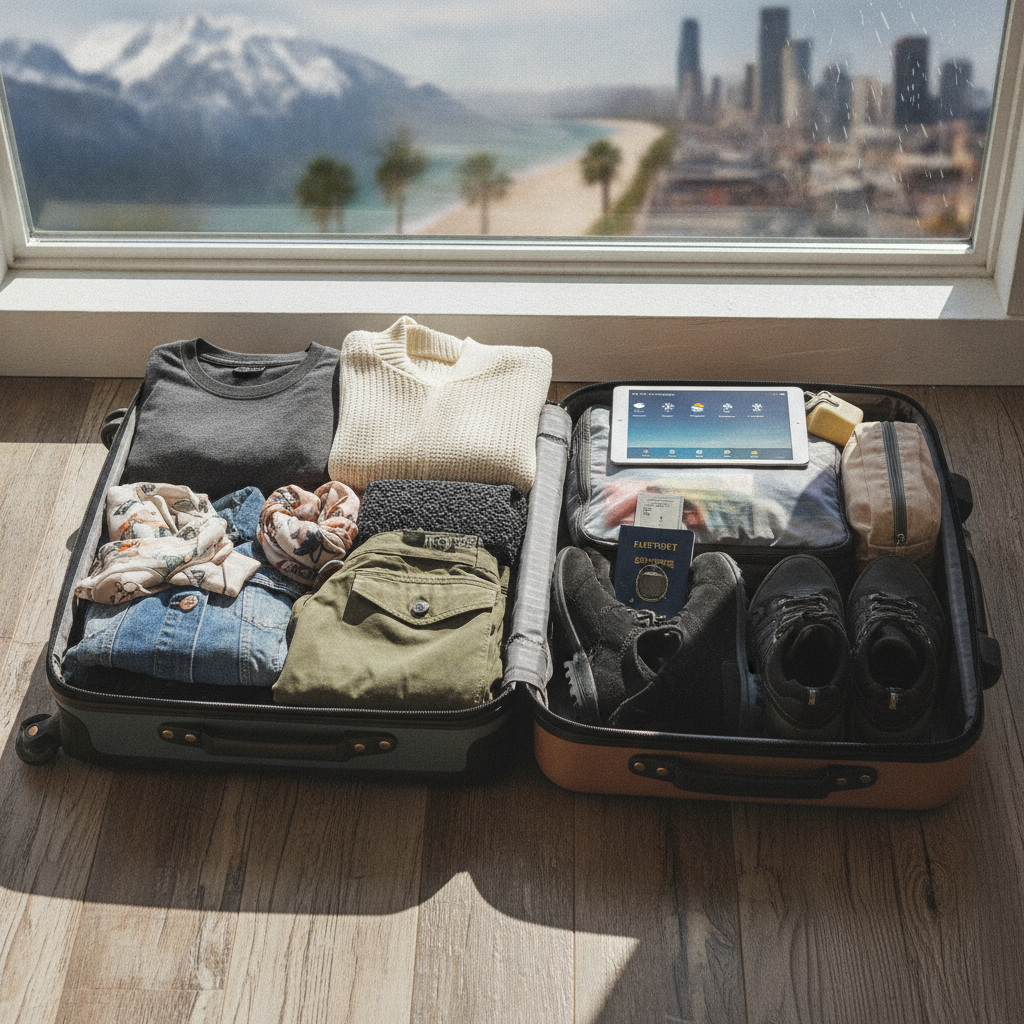
There is a particular kind of exhaustion that follows the well-planned trip — the one with six cities in eight days, a color-coded itinerary, and a camera roll full of landmarks seen briefly and from a distance. The traveler returns home with souvenirs and stories, yet carries a faint, nagging sense that something essential was missed. It's a feeling that's difficult to name, because the trip was technically successful: the major sights were seen, the famous restaurants were visited, the boxes were checked. What was missing wasn't access or effort. It was time — the unhurried, unscheduled kind that allows a place to reveal itself on its own terms.
The Case for Staying Put
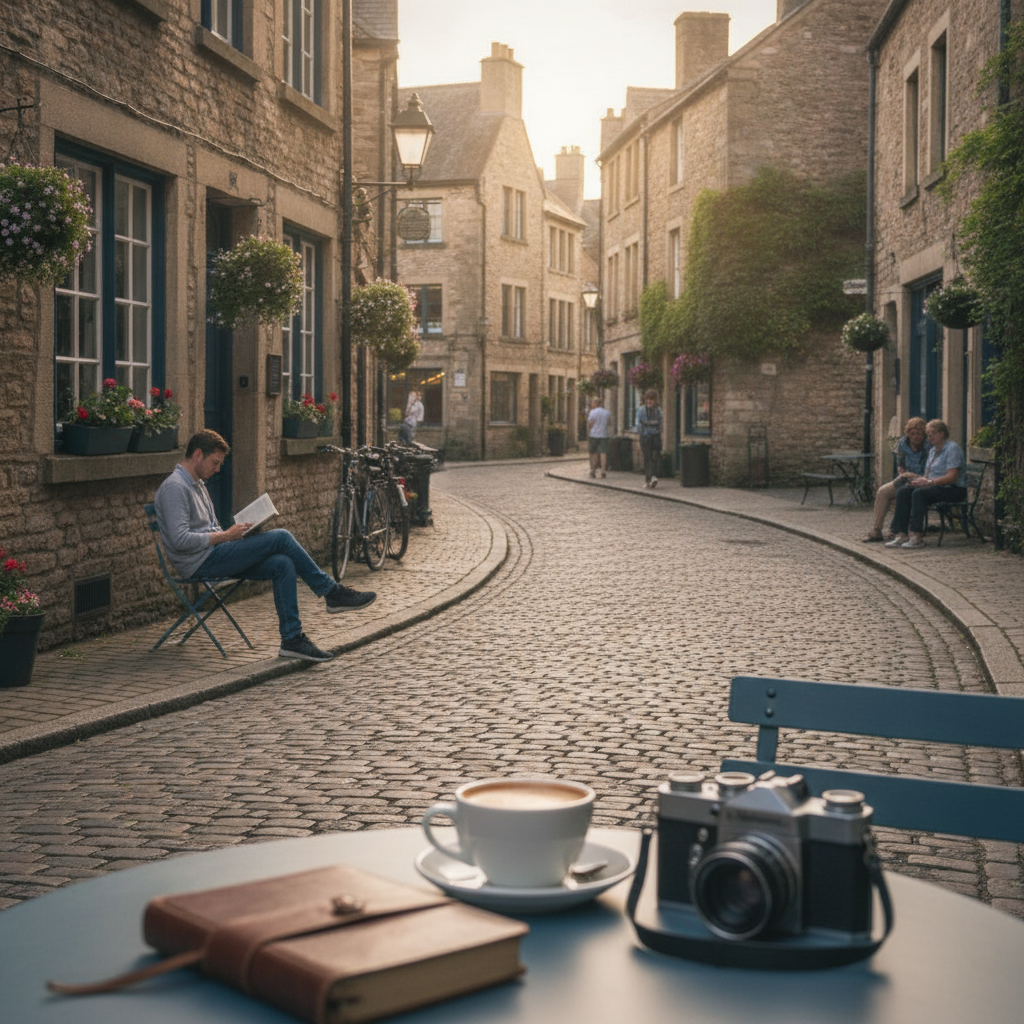
Slow travel, in its truest sense, isn't simply a slower pace of moving through multiple destinations. It's a deliberate choice to compress geography and expand time — to ask what a single street, a single *barrio* (neighborhood quarter), or a single arrondissement can offer when given more than an afternoon. The practice has deep roots in older forms of travel, when crossing distances took weeks and visitors had no choice but to settle temporarily into a place. What's been rediscovered in recent years is that this enforced stillness was actually its own reward. Staying in one neighborhood for a week or two forces a recalibration of what travel is supposed to accomplish. The pressure to accumulate experiences dissolves, and something more textured takes its place.
Take the Pigneto district in Rome, for example — a working-class neighborhood far removed from the Colosseum's orbit, where the streets are plastered with political murals and the bars fill with locals at the same hour every evening. A traveler passing through Rome for two days would never find it. One staying for ten days might wander into it by accident on day three, return on day five, and by day eight know the owner of the corner alimentari (small Italian grocery) well enough to exchange recommendations. That accumulation of small, repeated encounters is the architecture of genuine place-knowledge, and it can't be rushed.
How Repetition Builds Understanding
There is something quietly transformative about visiting the same market twice. The first visit is observational — the colors, the noise, the unfamiliar names on hand-lettered signs. The second visit is something different entirely. Faces become recognizable. Patterns emerge. The elderly vendor who arrives late, the stall that sells out of its best produce by nine in the morning, the rhythm of bargaining that differs from one end of the market to the other — these are details invisible to the first-time visitor but legible to anyone who has bothered to return. In a neighborhood like Kadıköy on Istanbul's Asian side, a traveler who spends a week shopping at the same *pazar* (open-air market) begins to understand the social fabric of the place in ways that no guidebook can approximate. Repetition, it turns out, is one of the most underrated tools available to the curious traveler.
This kind of accumulating familiarity also changes the traveler's relationship to disorientation. City-hopping tends to keep disorientation permanent — every day brings a new metro system, a new currency of social cues, a new set of unspoken rules to decode. Slow travel allows disorientation to resolve naturally. The streets that seemed identical on day one develop distinct personalities by day four. The language barrier, while never fully erased, softens as a handful of phrases become automatic. Getting lost stops being stressful and starts being interesting, because the neighborhood has become legible enough to offer context.
What Gets Missed at Speed
Fast travel selects for the extraordinary almost exclusively. The famous cathedral, the celebrated restaurant, the hilltop with the panoramic view — these things earn their reputations, and seeing them matters. But they exist within an ecosystem of the ordinary that gives them meaning, and that ecosystem is invisible to anyone moving too quickly to notice it. The school that empties at three in the afternoon, the *tabac* (French newsstand and tobacco shop) where the same three men argue over the same newspaper every morning, the smell of bread that drifts from the same bakery window at the same hour — these are the textures that make a place feel inhabited rather than staged. They're the difference between visiting a city and briefly touching its surface.
Apps like Airbnb and Vrbo have made week-long neighborhood stays genuinely practical for travelers who might once have defaulted to hotels near the tourist center. Booking a small apartment in Prenzlauer Berg in Berlin rather than a hotel near Checkpoint Charlie isn't just a financial decision — it's a philosophical one. It signals an intention to live temporarily as a resident rather than to move through as a spectator. The practical rhythms this enforces — finding a local grocery, learning which café has reliable Wi-Fi, figuring out the recycling system — are mild inconveniences that pay dividends in immersion.
The Art of the Purposeful Return
You already know, on some level, that the best moments from past trips weren't the landmarks. They were the accidents — the wrong turn that led somewhere better, the conversation that started over a shared table, the afternoon that had no plan and became the one you remember most clearly. Slow travel doesn't guarantee those moments, but it creates the conditions in which they're far more likely to occur. When you're not racing toward the next destination, you're available. The agenda loosens. The city has room to surprise you.
There's a word in Portuguese — *enraizamento* — that loosely translates to the act of taking root. It's used to describe the process by which a person begins to feel genuinely connected to a place, as opposed to merely present in it. That process takes time, and it's fragile; it can't survive a schedule that demands departure before it fully forms. The traveler who returns home from a week in one Roman neighborhood, one Istanbul district, or one Berlin *Kiez* (a German term for a tight-knit local neighborhood) carries something that a week of city-hopping cannot produce: not just memories, but a sense of having briefly belonged somewhere. That quality of belonging is, ultimately, what travel at its best has always promised — and what only stillness can deliver.