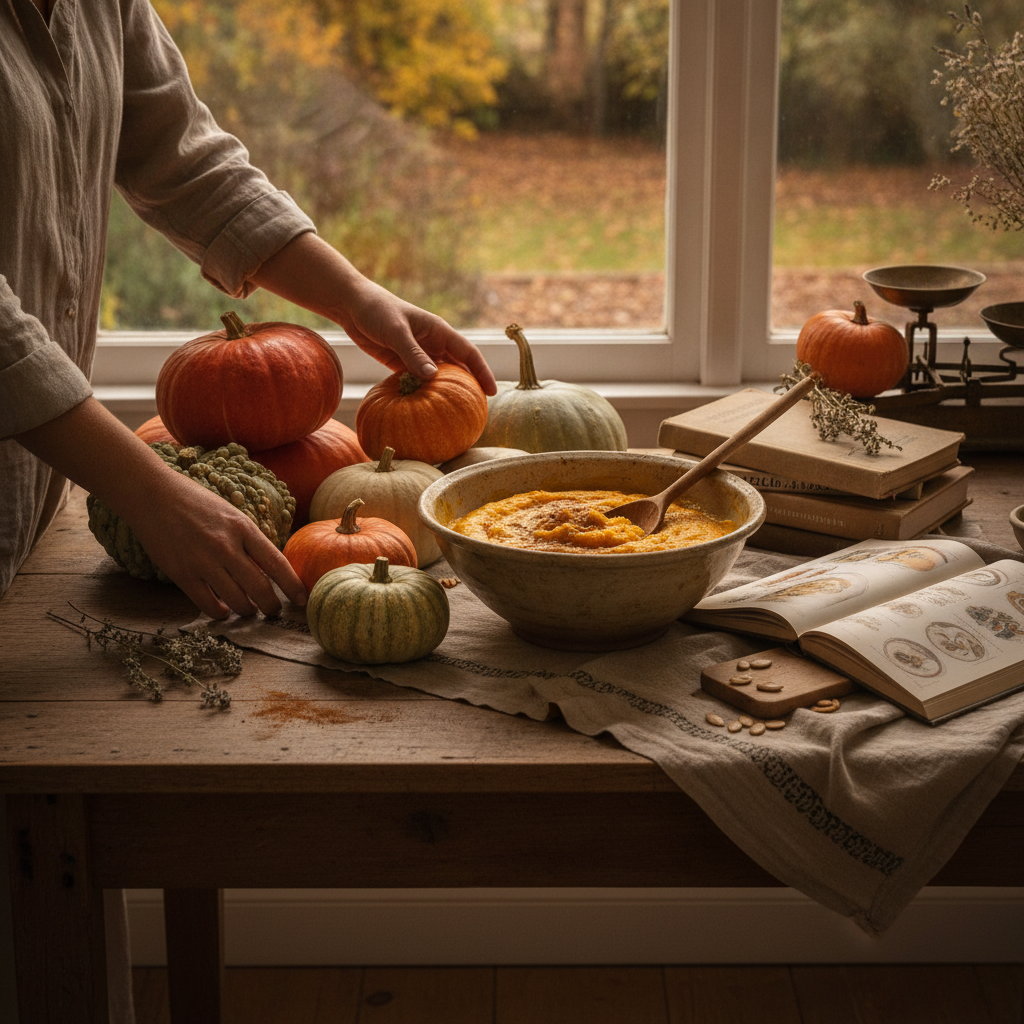
Most home cooks accumulate recipes faster than they ever use them. A new cookbook arrives, a few pages get dog-eared, and then it joins the shelf with the others — admired but rarely opened. The problem isn't enthusiasm. It's that collecting recipes gives you breadth without depth, and cooking well is fundamentally a practice of depth.
There's a quieter approach that changes this entirely. When you choose a single ingredient to focus on for an entire season — really focus on, not just cook with occasionally — something shifts in how you move through the kitchen. You stop performing recipes and start understanding food.
How Does Choosing One Ingredient Per Season Actually Work?
The idea is straightforward. At the start of each quarter, you select a single ingredient that's genuinely in season or meaningfully connected to that time of year. In spring, it might be asparagus or fresh peas. In autumn, it could be butternut squash, quince, or dried beans. You don't commit to cooking it every single day, but you do commit to returning to it regularly — exploring it raw, roasted, braised, preserved, and in combination with different flavor profiles. Over twelve to fourteen weeks, that ingredient stops being a variable in a recipe and starts becoming something you actually know.
Why Does Depth Beat Breadth in Learning to Cook?
Cooking is a skill that transfers through familiarity, not through volume. When you roast the same squash six different ways across a season, you begin to understand how its natural sugars behave under different levels of heat, how it responds to acid, how long it actually needs before it softens properly. That kind of understanding can't come from following a single recipe once and moving on. Apps like Paprika Recipe Manager are genuinely useful for collecting and organizing recipes, but even the most well-organized library of five hundred dishes doesn't teach you how ingredients actually work — only repetition and curiosity do that.
Depth also builds intuition. After a few weeks with a single ingredient, you'll find yourself adjusting a dish mid-cook with real confidence rather than anxiously following a method step by step. That's not a small thing. It's the difference between someone who cooks and someone who knows how to cook.
What Makes a Seasonal Ingredient Ritual Feel Different From a Cooking Challenge?
A cooking challenge tends to create performance pressure — the sense that you need to execute something impressive, document it, share it. A ritual has a different quality. It's quieter, more private, more oriented toward your own learning than toward an outcome. You're not trying to master a technique in a weekend. You're spending three months with a companion ingredient, letting it teach you things on its own pace.
The distinction matters because pressure kills curiosity. When you're worried about getting something right, you reach for the same familiar approach. When you're genuinely curious, you experiment — and that's where real cooking skill develops. Using a platform like Yummly to discover different cultural preparations of the same ingredient can spark ideas without prescribing methods, which keeps experimentation alive throughout the season.
How Do You Choose the Right Ingredient for Each Quarter?
The best choices tend to share a few qualities. They should be genuinely available and affordable during that season, which keeps the ritual grounded in the real rhythm of food rather than in grocery store abstraction. They should also have enough versatility to reward repeated exploration — an ingredient with only one or two good uses will exhaust itself quickly. Root vegetables, legumes, stone fruits, winter citrus, and alliums all fit this profile well.
Seasonal produce apps like Seasonal Food Guide can be genuinely helpful here. They organize ingredients by current growing season in your region, which prevents you from accidentally choosing something that's technically available year-round but isn't at its best right now. Eating something in its actual season, rather than its refrigerated-transport season, is often what changes a person's mind about an ingredient they thought they didn't like.
What Practices Deepen the Ritual Within Each Season?
Beyond simply cooking with the ingredient regularly, a few habits make the ritual noticeably richer. Keeping a short running journal — even just a few lines after each cook — about what worked, what surprised you, and what you'd adjust next time creates a thread of learning you can follow back through the season. It doesn't need to be formal. A notes app or a physical notebook both work equally well.
Trying at least one cultural tradition that centers on your chosen ingredient adds another layer. If your autumn ingredient is lentils, spending time with both French lentilles du Puy preparations and South Asian dal techniques in the same quarter gives you a sense of how one ingredient carries an entire cuisine's logic. That perspective doesn't come from any single recipe. It comes from holding multiple approaches to the same thing simultaneously.
For community inspiration, the Cookpad platform offers a wide range of home cook recipes organized by ingredient rather than by cuisine or occasion, which makes it well-suited to exactly this kind of ingredient-centered exploration.
When Is the Right Time to Start?
The honest answer is that any point in the calendar works, because the practice is self-contained within each quarter. That said, beginning near the natural transition between seasons tends to feel more anchoring — early March, early June, early September, or the start of December each carry a distinct atmospheric quality that makes the commitment feel meaningful rather than arbitrary. Choosing your first ingredient to align with what's actually appearing at your local farmers market or in the produce section right now gives the ritual an immediate sense of relevance.
You don't need a course, a new cookbook, or a special kitchen setup to begin. You need one ingredient, a little time each week, and the willingness to return to something more than once. That willingness — more than any recipe collection — is what actually builds a relationship with cooking. Start with whatever is in season where you are, and let the quarter do the work.