Most people treat free time the same way they treat an empty evening: they open a screen and see what happens. The problem isn't the screen itself — it's the absence of intention. When leisure has no structure, the brain doesn't actually shift into recovery mode. It stays in a low-grade reactive state, skimming notifications and half-watching content without ever arriving anywhere satisfying. Research into cognitive restoration consistently points toward one insight: the quality of rest depends less on the amount of free time available and more on the nature of what fills it.
How the Brain Experiences Unstructured Downtime
Open-ended screen time creates a particular kind of mental fatigue because it mimics work without producing results. Scrolling through social platforms like Instagram or news feeds engages the same evaluative circuits that process workplace decisions — only without any resolution. The brain keeps scanning for something worth stopping on, which means it never fully stops. Defined leisure modes, by contrast, give the nervous system a clear signal: this activity is bounded, voluntary, and purposeful. That signal alone begins the recovery process before the activity even reaches its natural rhythm.
What a Leisure Mode Actually Means
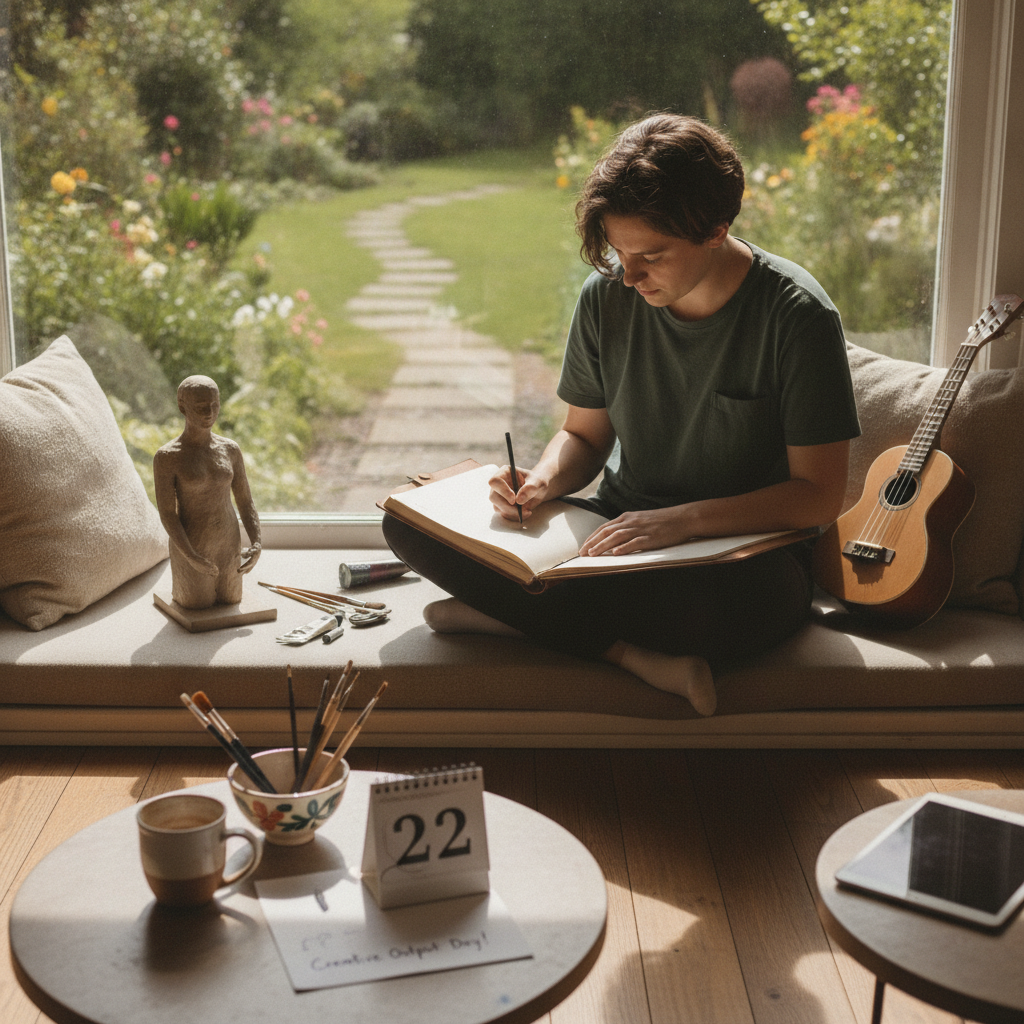
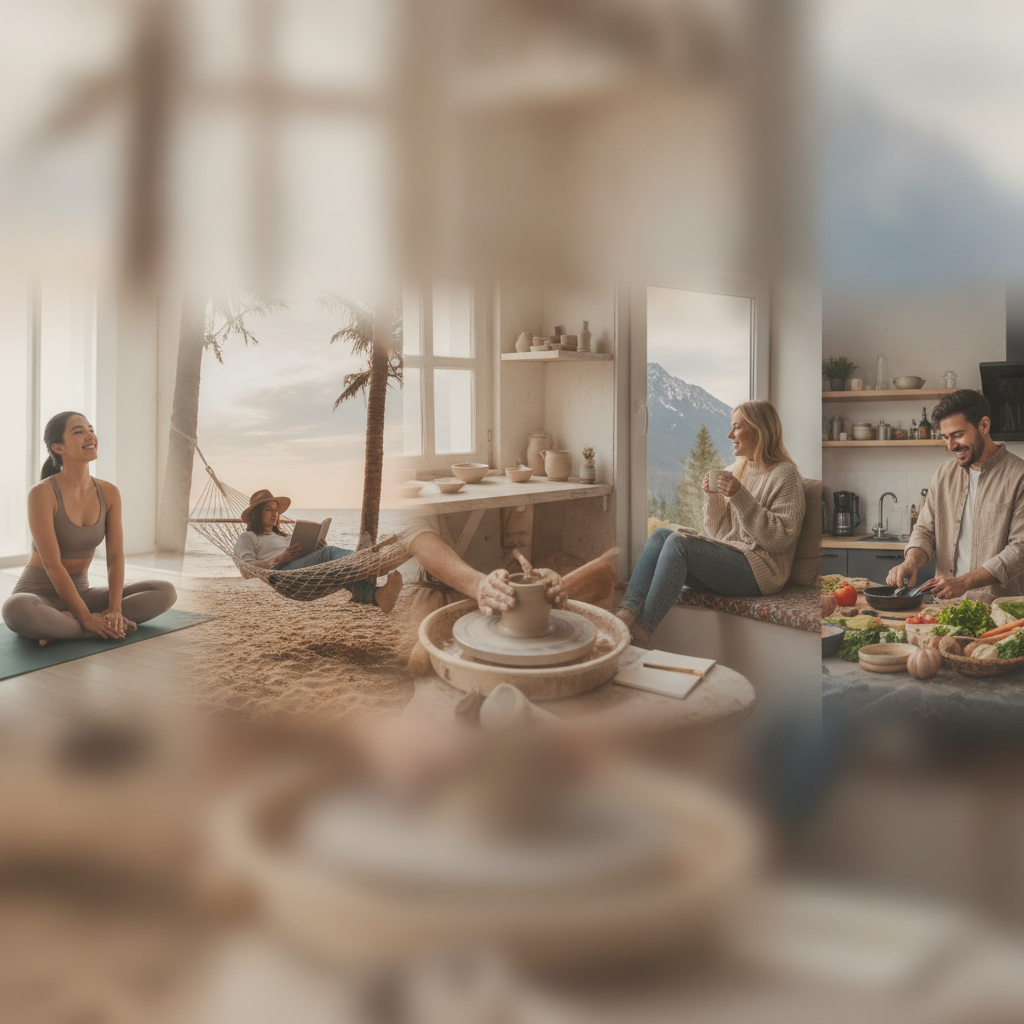
A leisure mode is a category of activity defined by its sensory and cognitive register — not just a specific hobby, but a type of engagement. Common examples include physical movement (walking, yoga, cycling), creative absorption (drawing, cooking from scratch, playing an instrument), social connection (an unscheduled call with a friend, a board game with family), and restorative solitude (reading a physical book, tending plants, sitting outdoors). The key distinction from default screen use is that each mode asks something specific of the body or mind — and in doing so, actually occupies it. The brain doesn't wander back toward its task list when it's genuinely engaged elsewhere.
Why Three or Four Modes Creates the Right Range
Having a single go-to leisure activity can become its own kind of rut, particularly when energy levels vary across a week. A person who only recharges by running will find that rest isn't available on days when their body is sore or the weather is bad. Three or four defined modes — spread across physical, creative, social, and quiet dimensions — creates a menu flexible enough to match actual conditions. Apps like Finch or Notion have popularized the idea of building personal systems with modest structure, and the same logic applies here. Variety within a defined set prevents the paralysis of total openness without demanding rigid scheduling.
The Compounding Effect of Consistent Mode-Switching
When people rotate through defined leisure modes regularly rather than defaulting to passive consumption, they tend to report higher satisfaction with their evenings and weekends over time. This isn't coincidental. Each mode activates a different neural circuit — movement engages proprioception and rhythm, creativity engages spatial and expressive processing, social connection engages empathy and language, and solitary restoration engages the default mode network in genuine reflective rest. Cycling through these across a week means the whole system gets maintained, rather than one channel getting overloaded while others atrophy. The result, over weeks, is a baseline sense of feeling more rested without sleeping more hours.
Building Your Own Four-Mode Leisure Rotation
Setting up a rotation doesn't require a formal schedule — it requires pre-deciding rather than in-the-moment deciding. You choose your four modes in advance, ideally on a Sunday or at the start of a week, so that when evening arrives, the question isn't "what should I do?" but "which mode fits right now?" For physical movement, something as simple as a walk around your neighborhood or a 20-minute session with a YouTube fitness channel like Yoga With Adriene qualifies. For creative absorption, a sketchbook, a recipe you've been meaning to try, or even a LEGO set on the shelf counts. The specificity of the mode matters more than its sophistication. What you're doing is giving your future self a set of prepared answers to the question that open screen time usually answers by default.
Where Intentional Rest Is Heading
The broader culture is slowly moving toward a more deliberate relationship with leisure, driven partly by growing awareness of burnout and partly by the sheer volume of passive entertainment options that have proven, over time, to leave people feeling less restored than expected. Wellness platforms and productivity frameworks are increasingly incorporating "rest design" as a concept distinct from time off — the idea that recovery is a skill to be practiced, not a state to be stumbled into. As that understanding deepens, the instinct to simply open a phone when a free hour appears will likely be recognized for what it often is: a habit of avoidance rather than a genuine act of rest. Leisure designed with even modest intentionality tends to outlast its own moment — it carries forward into the next day as a quieter mind, a more present attention, and a sense that free time was actually used rather than consumed.