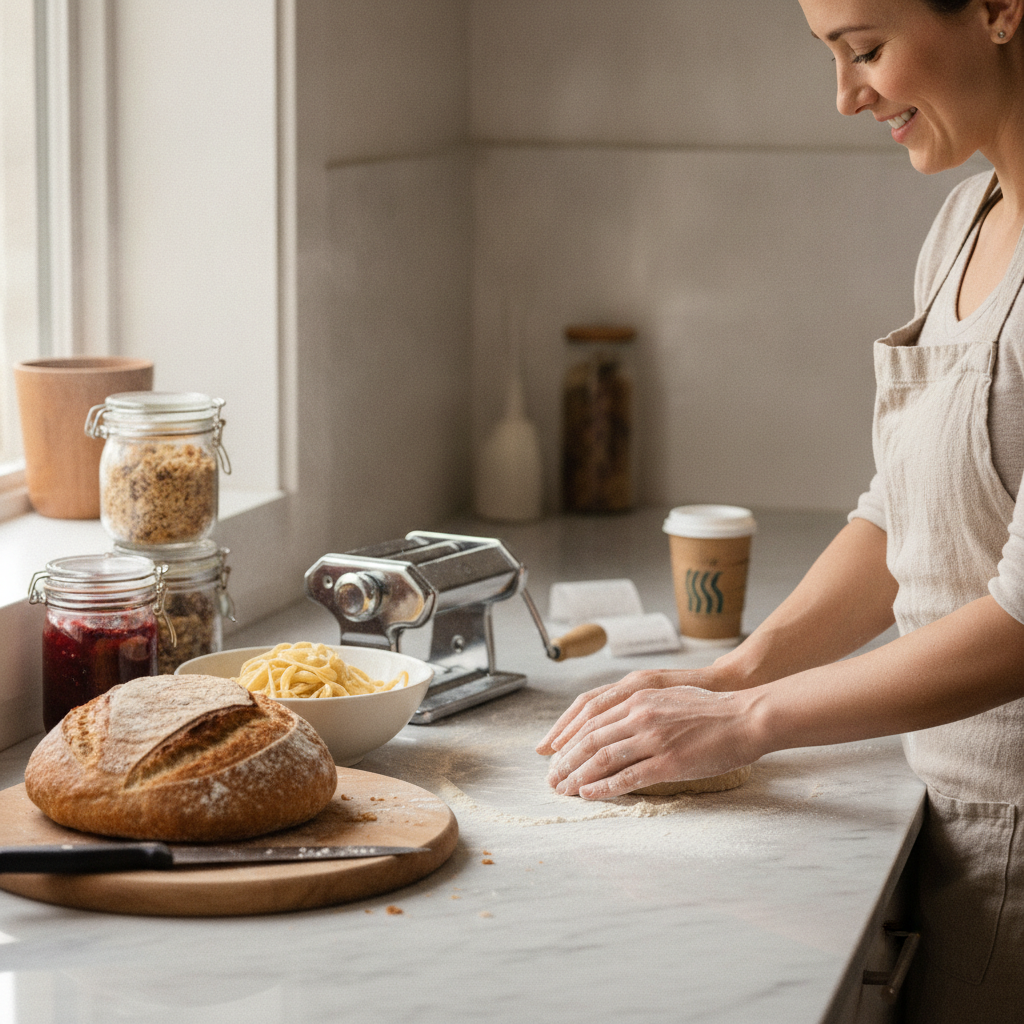
Modern households have quietly outsourced a remarkable number of everyday skills — not out of laziness, but out of genuine time pressure and the sheer availability of ready-made alternatives. Pre-seasoned rotisserie chickens, store-bought bread, jarred sauces, and cleaning spray bundles have become default answers to questions that used to have homemade solutions. The trade-off is real and understandable. But there's a gradual cost: the more you rely on convenience products for basic needs, the more unfamiliar the underlying processes become — and the less resilient your household feels when budgets tighten or circumstances shift.
The good news is that rebuilding that competence doesn't require an overhaul. It takes one substitution at a time.
Choose the Swap That Already Annoys You Most
The best place to start is with a convenience product you already resent buying. Maybe it's the overpriced loaf of sandwich bread from a brand like Pepperidge Farm that goes stale too fast, or the weekly tub of hummus that costs three times what a bag of dried chickpeas would. When mild frustration is already present, motivation tends to follow naturally. You don't need enthusiasm for the project — you just need enough irritation with the current situation to try something different once. That low bar is actually a feature, not a compromise.
Start Simple Enough to Succeed the First Time
The fastest way to abandon a new habit is to make the first attempt too ambitious. A no-knead bread recipe requires almost no active time and produces results that are genuinely comparable to bakery loaves. A basic vinaigrette takes under two minutes and replaces a bottle of Kraft salad dressing that's mostly sugar and stabilizers. Starting with something that has a high success rate on the first try builds a different kind of confidence — the quiet, practical kind that makes you reach for the mixing bowl again next week without overthinking it.
Track What You Actually Spend on the Convenience Version
Before you make a swap permanent, spend two weeks noting what the ready-made version costs you. This isn't about dramatic savings calculations — it's about making the invisible visible. Many households genuinely don't realize how much they're spending on specific categories until they write it down. A weekly jar of pasta sauce, a pack of pre-cut stir-fry vegetables from Trader Joe's, or a box of granola bars adds up over a month in ways that are easy to overlook on a grocery receipt. Knowing the real number gives the substitution a concrete, satisfying context.
Let the Skill Build Gradually Rather Than Forcing Mastery
The goal of the first scratch-made version isn't perfection — it's familiarity. A homemade tomato sauce that turns out slightly thin is still a sauce you made, and next time you'll add less water or simmer it longer. This is exactly how practical competence develops: through small, low-stakes iterations rather than formal instruction. Over several months, you'll find yourself understanding a process instead of just following steps. That understanding transfers. Someone who has made bread a dozen times starts to intuitively grasp why other baked goods work the way they do.
Add a Second Swap Only After the First Feels Automatic
Resistance builds when change feels constant. The single-swap approach works precisely because it limits the adjustment period to one area at a time. Once making your own granola or a weekly batch of stock feels like background noise — something you do without planning around it — that's the signal to consider a second substitution. There's no fixed timeline for this. For some routines it takes three weeks, for others it takes three months. The measure isn't time; it's whether the new behavior feels like a default rather than a decision.
Use the Scratch Version to Understand What You Were Buying
One underrated benefit of making something from scratch is that you start reading labels differently. When you know that a good all-purpose cleaner is largely water, a surfactant, and a fragrance, the premium pricing on Method or similar products starts to look different. When you've made your own granola with oats, nuts, and a bit of maple syrup, you understand exactly why the store version's ingredient list is so long. This kind of informed awareness doesn't require cynicism — it just means you're buying things with open eyes rather than brand habit.
Build a Small Repertoire Rather Than an Endless List
Five to seven reliable scratch-made swaps, repeated consistently, will do more for your household's practical resilience than a rotating list of twenty things you attempt once and abandon. Think of it the way a home cook thinks about weeknight dinners — a short rotation of dependable recipes that you know cold beats an ambitious cookbook that never gets opened. Brands like King Arthur Flour have built entire communities around this idea: people who make the same few recipes reliably, season after season, and gradually expand from that stable base rather than starting from scratch every time.
Recognize the Competence as the Real Return
The financial savings from replacing convenience products with homemade equivalents are real and worth acknowledging. But the deeper return is something harder to price: you become someone who knows how to do things. That identity shift happens quietly, one loaf or one batch of soup at a time. Households that carry a broad base of practical skills weather disruptions — travel, illness, budget crunches, supply chain gaps — with noticeably less stress. The competence you build isn't stored on a shelf. It stays with you, gets faster, and compounds in ways that show up long after you've stopped thinking of it as a project.
Pick one thing this week. Just one. Make it small enough that failure would barely register, and simple enough that success is likely. That first swap is the whole point — not because it saves a specific amount of money, but because it begins a quiet, steady process of knowing your own household better than any convenience product ever could.