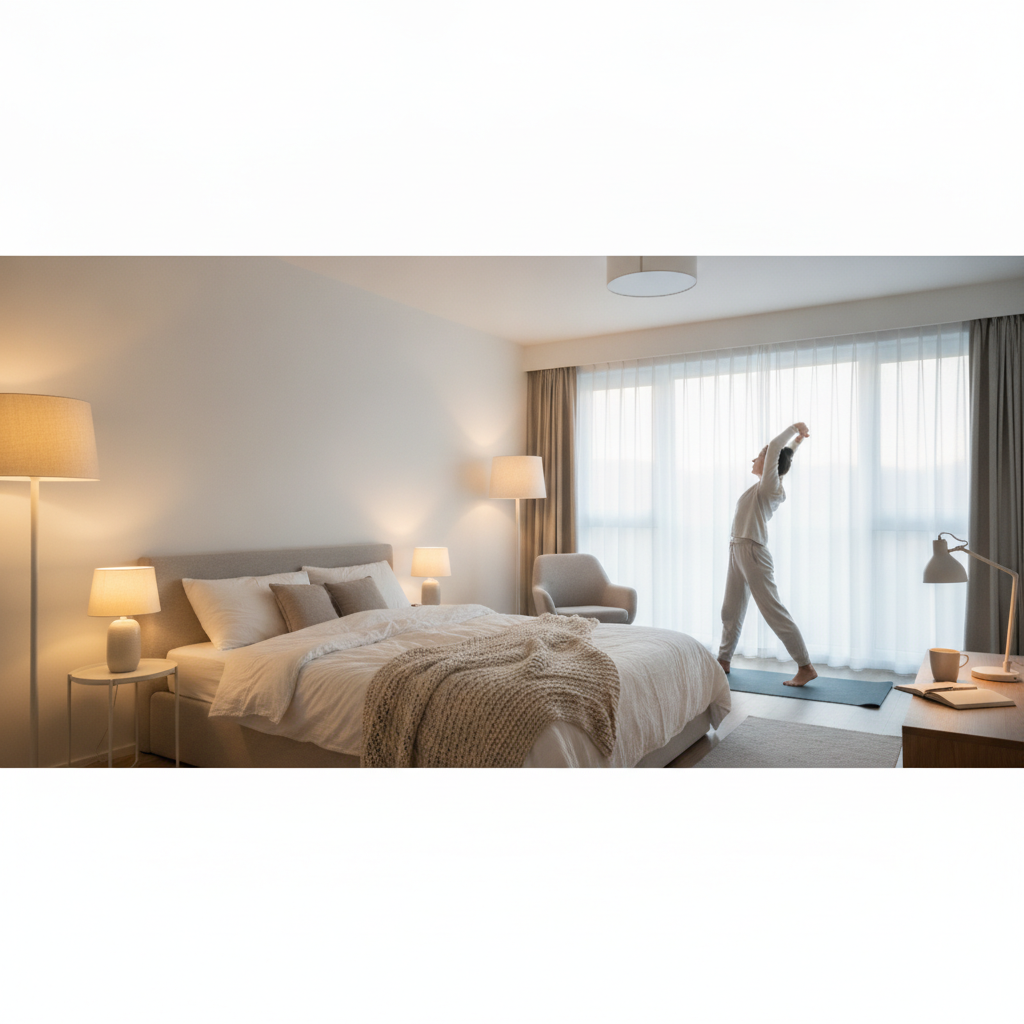
Most bedrooms are lit the same way they were set up on moving day — a single overhead fixture controlled by one switch, flooding the room with the same harsh light whether it's seven in the morning or ten at night. It works, technically. But it doesn't work *for* you. The overhead light doesn't know you're winding down for sleep or gearing up to start the day. It just blasts the room uniformly, leaving your nervous system to figure out the rest. Swapping that single source for layered lamp lighting is one of the simplest, most affordable room changes you can make — and the shift in how you feel morning and night is immediate.
Place a Warm Bedside Lamp Within Easy Reach
The most important lamp in your bedroom is the one you can turn on and off without getting out of bed. A small bedside lamp with a warm-toned bulb — something in the 2200K to 2700K range — creates a soft pool of light that signals your brain it's time to slow down. Brands like IKEA and Brightech both offer compact options that fit nearly any nightstand. When the last thing you see before sleep is warm, low light rather than a bright overhead beam, your melatonin production stays on schedule and sleep onset tends to come faster.
Add a Corner Floor Lamp for Ambient Fill
A single bedside lamp is a great start, but a corner floor lamp gives the room a sense of evenness that prevents one side from feeling overly dim. Floor lamps with upward-facing shades bounce light off the ceiling and walls, creating a diffused glow rather than a direct beam. This indirect approach is much easier on the eyes during evening reading or relaxed conversation. Look for a model with a dimmer switch built in — even a simple arc lamp from a store like West Elm can transform the entire atmosphere of the room when set to its lowest output.
Use a Smart Bulb in One Lamp for Timed Gradual Brightening
Morning motivation often stalls because the transition from sleep to wakefulness is too abrupt. A smart bulb — Philips Hue is one of the most reliable options available — can be programmed to gradually increase brightness starting fifteen or twenty minutes before your alarm. This simulated sunrise effect brings your body out of deep sleep more gently, so you wake up feeling less groggy and more ready to move. You don't need to convert every lamp in the room to smart bulbs. One is enough to make a meaningful difference in how your mornings begin.
Keep the Overhead Light for Functional Moments Only
This doesn't mean ripping out your overhead fixture entirely. Overhead lighting still has its place — getting dressed, finding something you dropped, doing a quick tidy before guests arrive. The key is treating it as a utility tool rather than your default setting. Once you have layered lamps in place, the overhead becomes the exception rather than the rule. Keeping it on a separate switch or even adding a dimmer makes it easier to use it selectively without disrupting the ambient mood you've built with your other sources.
Try a Small Desk or Shelf Lamp for Focused Task Light
If you read, journal, or do any light work in your bedroom, a small task lamp positioned near that activity keeps the rest of the room calm while giving you enough light to focus. This prevents you from needing to turn on the overhead just to read a few pages. A clip-on lamp or a compact base lamp with an adjustable neck works well on a bedside shelf or dresser. Keeping task light contained to one area also reinforces the psychological boundary between active and restful zones within the same room.
Match Bulb Color Temperature Across Your Lamps
One mistake that undermines the layered lighting effect is mixing cool and warm bulbs in the same room. A warm bedside lamp next to a cool-white floor lamp creates a visual inconsistency that feels slightly off without you being able to name why. Aim for consistency across all your bedroom light sources — generally staying below 3000K for evening-friendly warmth throughout the space. Once everything matches, the room reads as intentional rather than assembled from whatever bulbs were on hand.
Introduce a Dimmable Table Lamp as Your Transition Light
A dimmable table lamp placed somewhere between the bed and the door — on a dresser, a small accent table, or even the floor — creates a natural transition zone as you move through the room. In the evening, you can dim it down as the night progresses, signaling a gradual shift toward sleep. In the morning, bringing it up to a moderate level before the rest of the house is active gives you a gentle on-ramp to the day. This kind of graduated light change, rather than a sudden flip from darkness to full brightness, is one of the most underrated tools for managing daily energy rhythms.
Reflect Light With Thoughtful Placement Near Mirrors
Where you place your lamps matters as much as which lamps you choose. Positioning a lamp near a mirror or a light-colored wall dramatically increases the reach of a single bulb without adding harshness. The reflected light stays soft and diffused rather than direct, which maintains the calm atmosphere layered lighting is designed to create. Even a simple repositioning of a lamp you already own — angling it toward a white wall instead of outward into the room — can noticeably change how spacious and settled the space feels.
Lighting a bedroom well doesn't require a renovation or a significant budget. It starts with one warm lamp within reach of your pillow and builds from there. Each addition gives you more control over how the room feels at different points in your day — and that control, even in something as simple as which light you turn on first, shapes your mood more than most people expect. Start with the bedside lamp tonight, and notice how differently the room feels by the time your head hits the pillow.