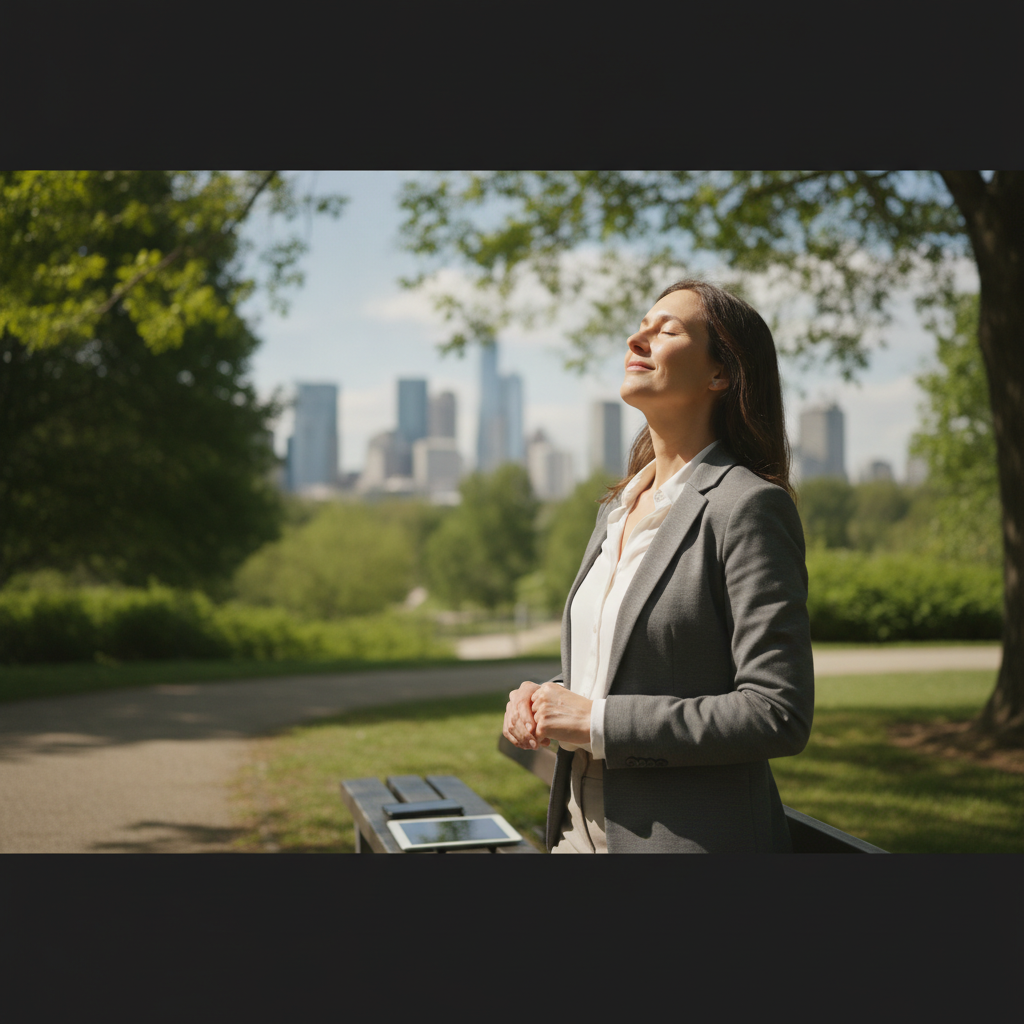
Afternoon energy crashes are not a personal failing — they're a physiological pattern shaped by light exposure, stress hormone rhythms, and what you do during the brief windows when you step away from work. Most people reach for their phone during those gaps, but that habit may be quietly extending the cognitive drain they're trying to escape. Swapping that scrolling break for ten minutes outside — even on a cloudy day — produces measurable changes in how your body manages cortisol and how depleted you feel by evening.
If you've been ending your workdays feeling wrung out despite not doing anything physically demanding, your midday break habits are worth a close look. The good news is that the adjustment is small, free, and doesn't require a gym, an app, or a subscription to anything.
Why Does Midday Cortisol Matter So Much?
Cortisol follows a natural arc across the day — highest in the morning, gradually declining through the afternoon. The problem is that screen-based stimulation, especially the reactive kind that comes with social media, tends to produce small cortisol spikes at exactly the wrong time. Those spikes don't feel like stress; they feel like mild engagement. But they interrupt the body's natural downward slope and leave you with elevated stress hormones heading into the late afternoon, which then compete with the processes that support clear thinking and emotional steadiness.
What Makes Outdoor Light Different From Indoor Light?
Natural light — even the diffuse kind on an overcast afternoon — is significantly more intense than typical office or home lighting. This matters because your nervous system uses light as a timing signal. Brief outdoor exposure around midday helps reinforce the body's circadian rhythm, which in turn supports the cortisol curve behaving the way it's supposed to. Apps like Visible Body and wearables from Oura and Garmin have helped people visualize these patterns, but the underlying mechanism doesn't require any tracking tool to work.
How Does Stepping Away From a Screen Change Your Brain?
Digital scrolling is a low-grade but continuous demand on your attention system. Your eyes shift constantly, your brain processes new information with every swipe, and your nervous system stays in a mild alerting state throughout. Outdoor exposure, by contrast, tends to engage what researchers call soft fascination — a relaxed, unfocused attention directed at natural elements like trees, sky, or movement. This mode of perception allows the prefrontal cortex to recover from directed effort, which is exactly what accumulates into end-of-day mental fatigue when it never gets a real pause.
What Should the Ten Minutes Actually Look Like?
The format matters less than the location. You don't need to walk briskly, follow a route, or hit a step target. Standing outside in natural light, sitting on a step, or wandering slowly around a block all produce similar benefits in terms of cortisol regulation and attentional recovery. The key variables are actual outdoor exposure — not a window — and the absence of your phone as a primary focus. Leaving the device inside, or at minimum keeping it in your pocket, is what allows the nervous system reset to happen.
Does Weather Affect Whether This Works?
Cloudy days still deliver far more light intensity than indoor environments, so overcast conditions don't eliminate the benefit. Cold weather is a common reason people skip outdoor breaks, and while it's understandable, even a brief cold-exposure moment has its own signaling effects on alertness and immune function. If your climate makes prolonged outdoor time uncomfortable, a sheltered doorstep, a covered patio, or even a rooftop access point in a building like The Standard or a similar urban workspace still counts. The threshold is lower than most people assume.
How Quickly Do the Effects Show Up?
Some people notice a shift within the first week — specifically a reduction in that foggy, overstimulated feeling that tends to arrive around 4 or 5 p.m. The cortisol effect is more gradual and cumulative, building over consistent repetition rather than appearing after a single session. Think of it the way you'd think about sleep consistency: one good night helps, but the real gains come from the pattern. Two to three weeks of daily midday outdoor breaks tends to be where most people notice a meaningful difference in how they feel at the end of their working hours.
What Habits Pair Well With This Break?
The outdoor break works best when it's genuinely low-input. Listening to a podcast or taking a work call while you're outside captures some of the light benefit but loses most of the attentional recovery piece. A simple pairing that enhances the effect is slow nasal breathing during the first few minutes outside — it activates the parasympathetic nervous system and accelerates the cortisol come-down. Hydrating before you go out also matters more than people realize, since mild dehydration amplifies the perception of fatigue during afternoon hours.
How Does This Compare to Other Common Midday Habits?
A coffee refill delays the crash but doesn't resolve it, and caffeine consumed after early afternoon reliably disrupts sleep architecture later that night. A brief meditation session offers attentional recovery but lacks the light-signaling benefit. A walk on a treadmill in a gym provides movement without the natural light component. The outdoor break is genuinely distinct because it addresses multiple systems — circadian rhythm, cortisol regulation, and attentional recovery — in one ten-minute window. That's a rare combination for something that costs nothing and requires no scheduling.
As wearable technology continues to improve, real-time cortisol monitoring is moving closer to consumer availability. Devices currently in development from companies including Biolinq are building toward continuous stress hormone tracking, which will eventually let people see exactly how their midday habits affect afternoon physiology in personal, specific ways. For now, the consistent observation across physiology research is clear enough to act on: what you do at noon shapes how you feel at six, and ten minutes of daylight is one of the more powerful levers available to you.