There is a particular moment that happens to travelers staying in locally owned apartments abroad — usually around the second morning — when the hotel mindset finally releases its grip. The minibar is gone. The breakfast buffet is gone. What remains is a small kitchen, an unfamiliar grocery store around the corner, and a quiet invitation to figure out how people in this place actually eat. It is, for many travelers, the moment a trip quietly shifts from tourism into something closer to temporary residency.
The Shift That Happens at the Grocery Store
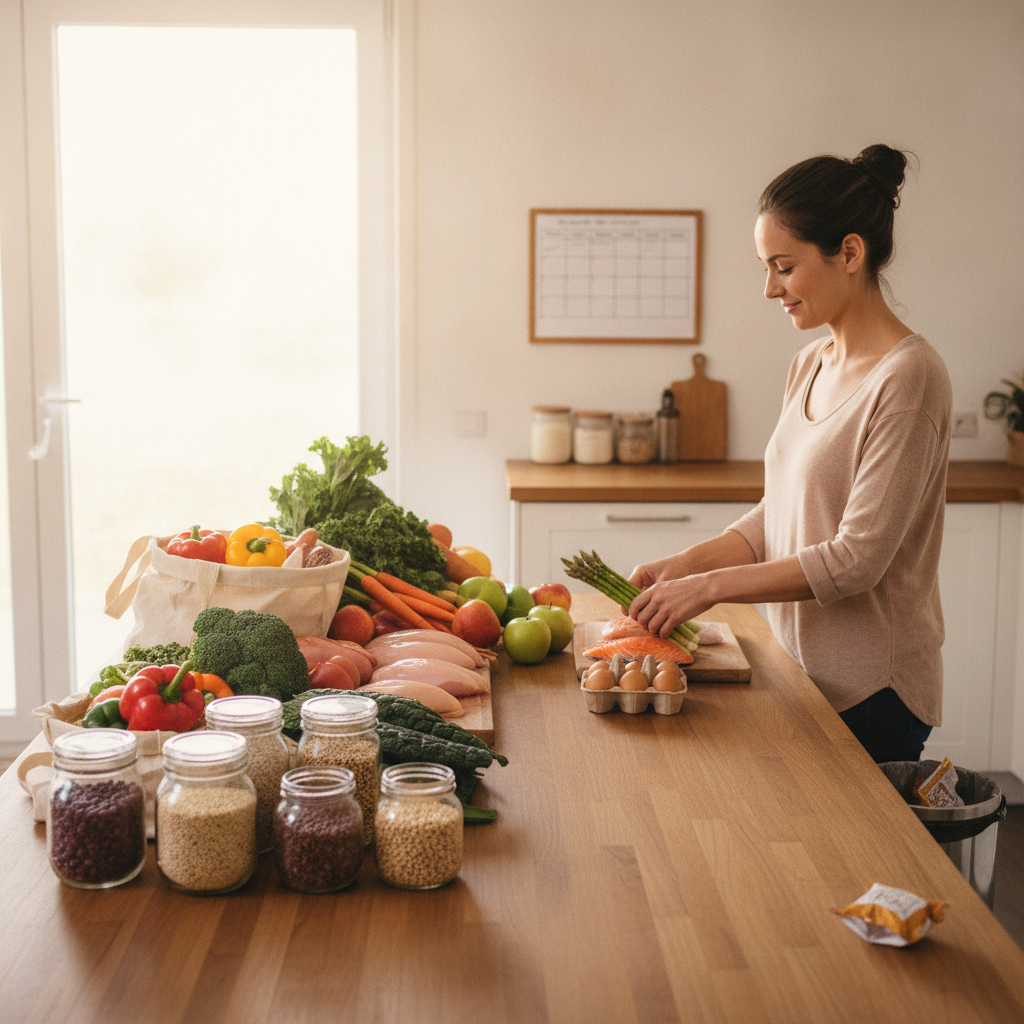
Checking into a locally owned apartment rather than a chain hotel sets off a cascade of small decisions that would never arise in a conventional stay. The traveler must find food, which means finding a market, which means walking streets that aren't on any highlights list. In cities like Lisbon's Mouraria district or the residential backstreets of Chiang Mai's Nimmanhaemin neighborhood, this errand becomes an orientation that no guided tour can replicate. The produce is local, the packaging is unfamiliar, the pricing reflects what residents actually pay rather than what tourists are expected to absorb. Standing in a neighborhood supermercado — a small, owner-operated grocery store common across Southern Europe and Latin America — with no particular agenda is one of the more honest ways to encounter a place. The choice of which olive oil to buy, or whether to attempt cooking a local grain for the first time, turns a logistical task into a kind of cultural study.
This is not a romantic abstraction. The practical reality is that travelers who cook even a few of their own meals during a stay abroad spend considerably less than those who rely entirely on restaurants. But the financial dimension is almost secondary to the shift in attention it requires. Reading labels in another language, navigating a market layout that follows a different logic, asking a shopkeeper a halting question — these small frictions are precisely what makes the experience formative rather than passive. Apps like Google Translate have made this less daunting than it once was, lowering the barrier without removing the engagement entirely.
Learning the Neighborhood's Actual Rhythm
Hotels exist in a kind of temporal bubble. Check-in is engineered for convenience, breakfast runs on a fixed schedule, and the building itself rarely reflects the hours or habits of the surrounding neighborhood. An apartment, by contrast, sits inside the city's actual rhythm. The traveler hears when the street market sets up on Tuesday mornings, notices that the café below doesn't open until ten, observes that the neighborhood grows quiet in the early afternoon and noisy again around seven in the evening. This is the concept of *ritmo urbano* — the urban rhythm — that urban anthropologists have long noted as a defining feature of how communities organize daily life. Understanding it, even partially, requires being physically embedded in it rather than adjacent to it.
This rhythm shapes grocery shopping in ways that aren't immediately obvious. In many European cities, smaller grocers and butchers close midday and reopen in the late afternoon. Farmers' markets like the Marché d'Aligre in Paris or Barcelona's Mercat de Sant Antoni operate on precise weekly schedules that reward those who know them. A traveler staying in a hotel rarely discovers these patterns because the hotel absorbs the need to know them. A traveler in an apartment quickly learns them out of necessity, and in learning them, absorbs something genuine about how the place operates.
What the Kitchen Table Teaches
There is an argument that the kitchen table is the most underrated piece of furniture in travel. Eating a meal prepared with local ingredients, however simply, in a space that feels domestic rather than transactional, changes the texture of a stay. The ritual of setting out ingredients, cooking something modest, eating without background music or a server's attentiveness — it creates a kind of quiet that hotels rarely offer. Platforms like Airbnb and Vrbo have made locally owned apartments more accessible globally, but the travelers who extract the most from the arrangement tend to be those who treat the kitchen as a genuine resource rather than an afterthought.
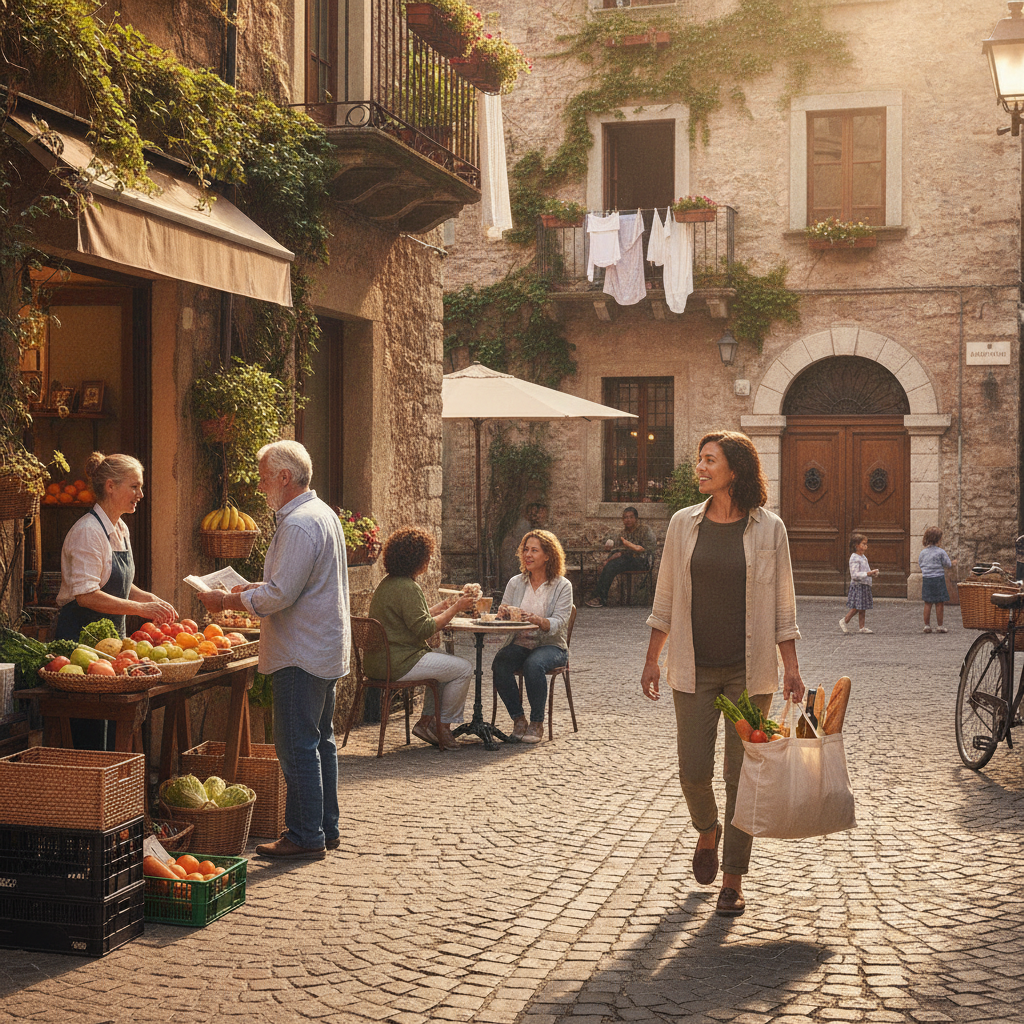
This doesn't require any particular culinary ambition. A simple breakfast of local bread, cheese, and seasonal fruit sourced from a neighborhood shop is already a form of participation. It situates the traveler inside the economy of the neighborhood rather than parallel to it. The money spent at a family-run grocery stays closer to the community than a hotel breakfast surcharge. The act of returning to the same shop two or three times across a week often produces something unexpected — a nod of recognition, a brief exchange, a small piece of local knowledge offered without prompting.
Settling Into a Place Rather Than Sampling It
The deeper change that comes from apartment-based travel abroad is a shift in orientation. Rather than moving through a city as a series of destinations to be checked and photographed, the traveler begins to experience it as a place where people have routines, preferences, and a sense of the ordinary. The neighborhood bakery becomes a landmark not because it appears in a guidebook but because passing it each morning makes it familiar. The older man who sells vegetables from a cart near the corner becomes, in a small way, part of the week. These are the textures of place that no amount of sightseeing efficiently produces.
When you choose an apartment in a working neighborhood over a hotel in a tourist corridor, you're not sacrificing comfort — you're trading one kind of experience for another. The trade is a kitchen for a concierge, a market errand for a room service menu, a slow Tuesday morning walk for a scheduled tour. Neither is wrong, but only one of them tends to leave travelers feeling that they've actually been somewhere, rather than simply passed through it. The moment that realization settles — usually around the second morning, with a cup of coffee made in someone else's kitchen, looking out at a street beginning its ordinary day — is the moment the trip becomes something worth carrying home.