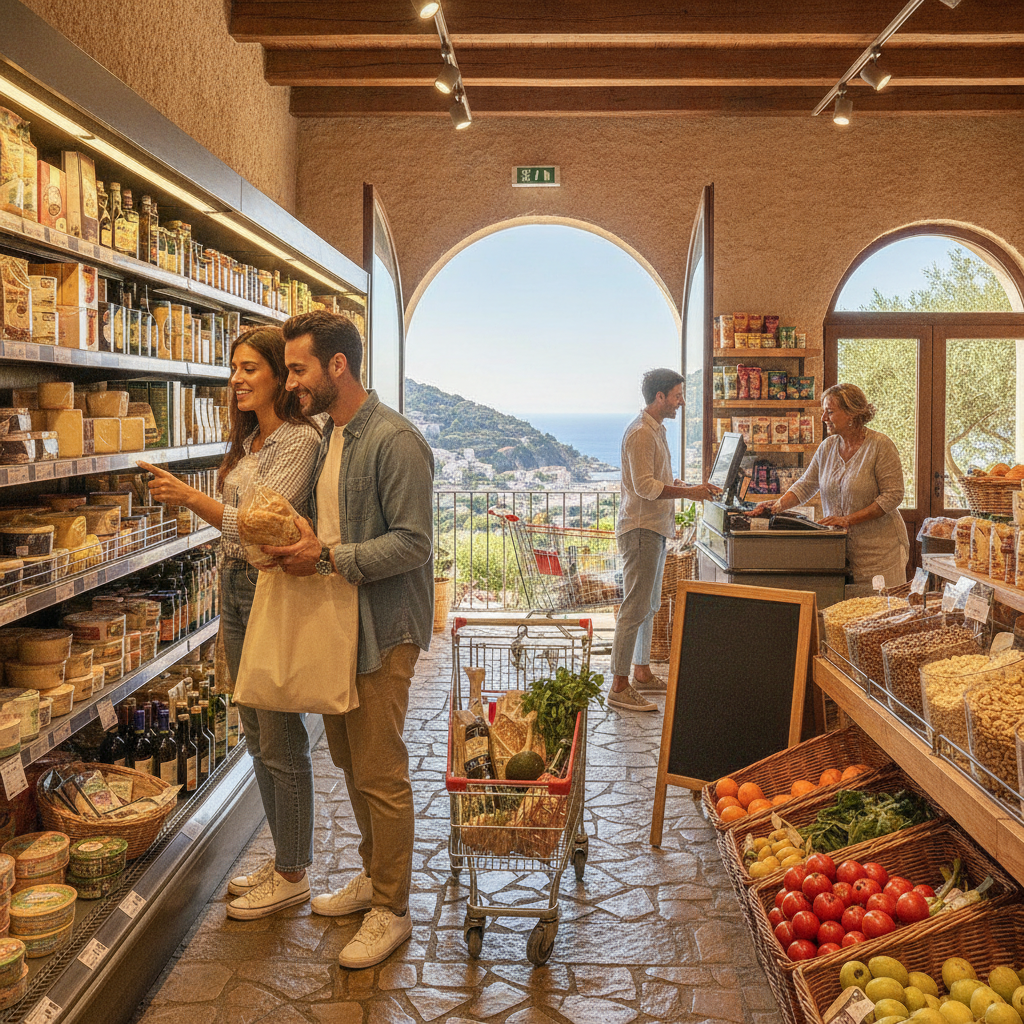
Most travelers do extensive research before a trip — flights, hotels, must-see landmarks, restaurant shortlists. The one thing that rarely makes that list is figuring out where locals actually buy their food. That single oversight quietly shapes every day of the trip in ways that are easy to miss until the trip is over.
The Difference Between a Tourist Store and a Local One
Every destination has a version of the same trap: a grocery store or market near the hotel that looks perfectly fine but is priced for visitors, stocked for convenience, and completely disconnected from how residents actually eat. These stores aren't bad — they're just not useful for understanding a place. The genuinely local chain, by contrast, tells you something real. In Lisbon, that might be Pingo Doce. In Japan, it's Aeon or a regional co-op. In Mexico City, it's Chedraui or La Comer. The specific name matters less than finding the one that residents use week to week, because that store becomes your reference point for everything from pricing to produce variety to the rhythms of daily life.
Spending twenty minutes on this research before you pack changes what you pack, how you plan your mornings, and where you instinctively head when you want something real to eat.
Why Local Grocery Stores Reveal What Guidebooks Can't
A local grocery chain is essentially a map of what people in that place eat, how they shop, and what's in season. Walk through the prepared foods section of a neighborhood Waitrose in a British city and you get one picture. Walk through the equivalent at a regional Co-op in a smaller market town and you get another — different cuts of meat, different staples on promotion, different snacks near the checkout. These differences aren't incidental. They reflect the economic reality, the food culture, and the priorities of the people who live there.
For travelers, that information is practical and immediate. You know what a reasonable price for bread looks like. You understand which staples are affordable and which feel like luxuries locally. You can stock a small apartment kitchen, a hotel mini-fridge, or even just a daypack with the kinds of snacks residents reach for — which turns out to be one of the more grounding experiences available to a visitor.
How One Pre-Trip Search Changes Your Daily Budget
Knowing your local grocery chain before you arrive does something specific to your spending patterns: it gives you an anchor. Without that anchor, every food purchase on a trip gets evaluated against an invisible comparison point that defaults to home — which is often misleading. With it, you start to understand what eating in that destination actually costs when you're not being priced as a tourist.
This matters most on longer trips, but it's surprisingly useful even on shorter ones. If you know that REWE in Germany carries solid prepared meals at reasonable prices, you can plan two or three evenings around that rather than defaulting to restaurants every night. If you know that Trader Joe's-style local chains in certain American cities anchor the neighborhood around them, you can use store location as a rough proxy for finding an interesting block to explore. The grocery store becomes both a savings tool and a research tool — which is a rare combination in travel planning.
Building the Research Into Your Pre-Trip Routine
This doesn't need to be a deep research project. A single search for "local grocery chains in [city]" combined with a quick scan of a travel forum like TripAdvisor or Reddit's travel communities will surface the right answer within a few minutes. Look for the chain that comes up most often in threads about living in that city rather than visiting it — that distinction matters. Expat forums are particularly useful here because people who have moved somewhere permanently tend to zero in on the practical options quickly.
Once you have a name, look up the nearest location to your accommodation and note the hours. That's genuinely all the preparation required. The rest happens in person, which is where the value actually lives.
What You Carry Home That Has Nothing to Do With Luggage
There's a quieter benefit to this habit that accumulates over several trips. Learning to find and use local grocery stores trains your eye for a different kind of travel altogether — one organized around how a place functions day to day rather than how it presents itself to visitors. You start to notice things: what's on sale, what's locally produced, what the checkout lines look like at 7pm on a Tuesday. These observations don't make it into any guidebook, but they're often what you remember most clearly months after the trip.
The grocery store becomes a kind of anchor for the entire experience. It's where you go when you're tired, when you want to eat something simple, or when you just need a few minutes inside a place that isn't designed around making you feel like a guest. That feeling — of being briefly, partially embedded in ordinary life somewhere else — is one of the most underrated things travel can offer.
Before your next trip, spend five minutes on this one small piece of research. Find the name, note the location, and let that simple anchor quietly improve every day that follows.