There is a moment that repeats itself in airports and train stations and market squares the world over — the moment a traveler opens their phone, holds it toward a local, and waits while a translation app renders something approximating human connection. It works, technically. Information is exchanged. The directions are given, the order is placed, the ticket is purchased. But something remains missing from the exchange, a warmth that no algorithm has yet learned to manufacture. That missing element is effort — the visible, slightly imperfect, entirely sincere effort of someone who tried to meet another person in their own language before asking that person to meet them in theirs.
Language is far more than a functional system for conveying information. It carries within it the entire architecture of a culture's values, humor, and history. When a traveler learns even a handful of phrases before arriving somewhere — *shukran* in Morocco, *gamsahamnida* in South Korea, *prego* in Italy — they are not merely memorizing sounds. They are signaling something about the kind of visitor they intend to be. That signal is received, almost universally, with a generosity that no amount of confident English or well-timed gesturing can reliably produce. The interaction shifts from transaction to contact, and contact is what travel, at its best, is actually for.
The Weight a Single Word Can Carry
The five phrases most worth learning before any trip follow a consistent pattern across cultures: a greeting, a thank-you, a please, an apology or excuse, and some form of acknowledgment that one's language skills are limited. This last phrase — *habla despacio, por favor* in Spanish, or *nihongo ga wakarimasen* in Japanese — is particularly powerful because it reframes the entire encounter. It tells the person being addressed that the traveler is aware of the gap, is not embarrassed by it, and is grateful for whatever patience might follow. That kind of preemptive humility tends to produce exactly the patience it requests. Locals who might otherwise brace for a demanding or oblivious encounter often visibly soften when they realize the person in front of them came prepared to be a student rather than a customer.
This is not a romantic fantasy about universal human connection. It is a practical observation about how social dynamics work. When people feel respected, they respond with more information, more warmth, and more willingness to help than they would otherwise offer. A vendor in Istanbul's Grand Bazaar who hears a visitor attempt *teşekkür ederim* — thank you — after a purchase is more likely to toss in a small gift, offer a better price on the next item, or recommend a nearby tea house that doesn't appear in any guidebook. These moments are not guaranteed, but they are far more common than most tourists who rely exclusively on English ever discover.
What Preparation Signals Before You Speak
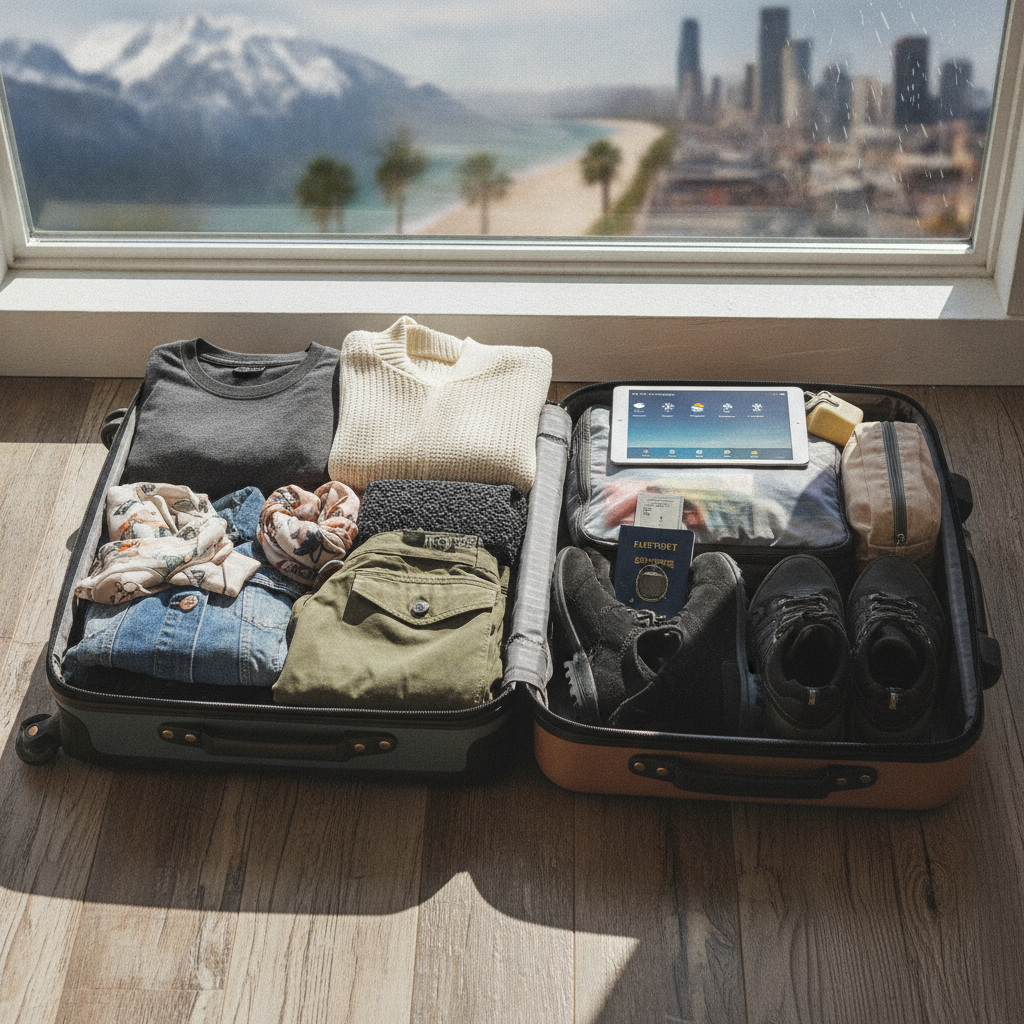
The act of preparation itself communicates something before a single phrase is uttered. Travelers who invest even an hour with an app like Pimsleur or Duolingo, or who listen to a destination's language in the weeks before departure, arrive carrying a different posture than those who do not. There is a groundedness that comes from having rehearsed — a willingness to be seen fumbling that reads, to locals, as genuine respect rather than performative tourism. In Japan, where the concept of *omotenashi* — a form of wholehearted, anticipatory hospitality — shapes nearly every service interaction, visitors who arrive with even rudimentary Japanese tend to find that hospitality extended more fully, more personally, and with less of the formal distance that greets those who arrive expecting English to suffice.
This preparation also changes the traveler's own relationship to the place. Learning five phrases requires looking up something about the country — its script, its phonetic patterns, what counts as polite versus casual register. That research inevitably produces adjacent knowledge: the understanding that Thai has tonal distinctions that change meaning entirely, or that in Greece, *parakalo* functions as both please and you're welcome, shifting meaning with context. These small discoveries open curiosity in a way that no hotel concierge recommendation or top-ten list can replicate. The traveler who arrives having genuinely studied, even briefly, notices more — because they have already begun to pay attention.
The Interactions That Become Something Worth Remembering
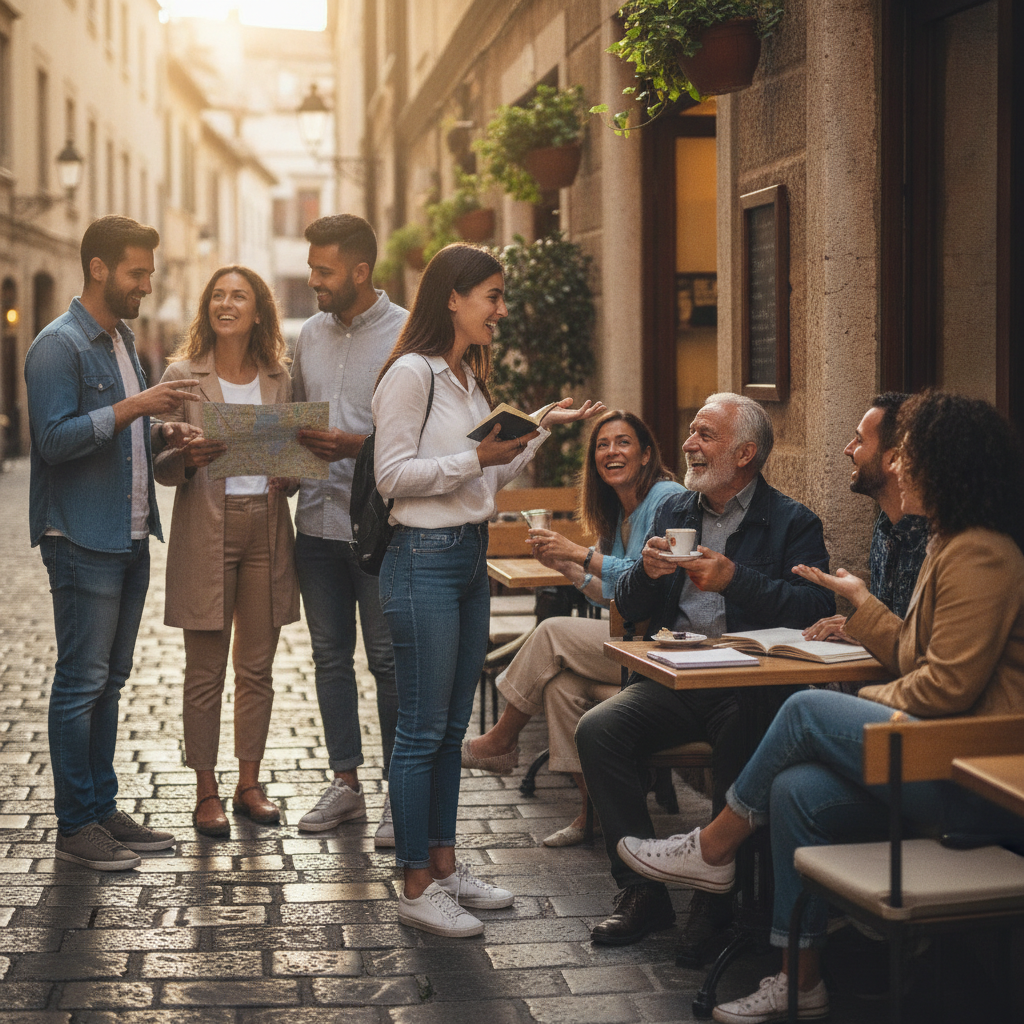
Ask seasoned travelers which moments from their trips they still carry with them years later, and the stories that emerge are rarely about landmarks or restaurants or views. They are about people — a guesthouse owner in Hoi An who taught them to make *pho* from scratch, a retired schoolteacher on a bus in Portugal who spent an hour drawing a hand-drawn map of the local coast. What nearly all of these stories share is an initiating gesture of linguistic goodwill. Someone tried, however imperfectly, and that trying opened a door.
This is where the practical and the reflective collapse into the same point. The phrases themselves are almost secondary. What matters is the demonstrated willingness to inhabit, even briefly, another person's linguistic world — to acknowledge that the local's language is not an obstacle to be worked around but a place worth entering. Five phrases won't make anyone fluent, and they won't prevent misunderstanding or awkwardness. But they establish, from the very first exchange, that a visitor came not merely to consume a destination but to meet it.
Before you arrive anywhere new, consider spending a single hour learning those five phrases — not as a travel hack, but as an act of preparation that quietly reshapes every conversation to come. The quality of what unfolds in the hours and days that follow tends to reflect, with striking accuracy, the quality of attention brought before the first step off the plane. That moment in the market square, phone extended, waiting for a machine to translate — it doesn't have to be how the story begins.