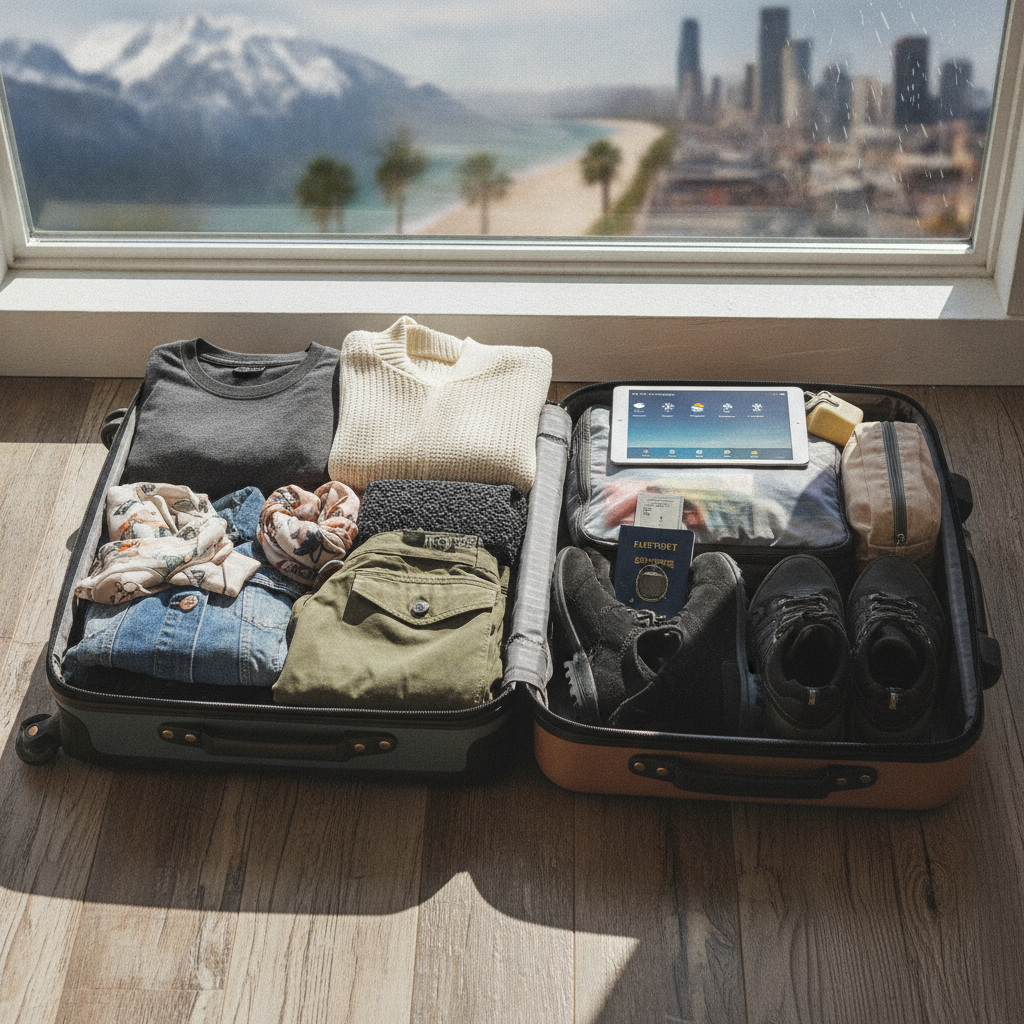
Packing for a trip that spans multiple climates is one of travel's most quietly exhausting puzzles. You're trying to anticipate beach weather, mountain cold, a nice dinner, and a full day of walking — all while fitting everything into luggage you can actually carry. The result is usually a suitcase stuffed with outfits planned around specific moments that rarely unfold the way you imagined. An interchangeable outfit system sidesteps all of that by treating your wardrobe as a set of modular pieces rather than a collection of occasion-specific looks.
Build Around a Neutral Color Foundation First
The whole system collapses if your colors don't play well together. Choose two or three neutrals — navy, grey, olive, or black — and let them form the base of everything you bring. When every piece can pair with every other piece, you multiply your outfit options without adding a single extra item. Brands like Merino & Co and Outlier have built entire product lines around this principle, and it holds up in practice. A navy shirt worn under a grey sweater works in the Scottish Highlands just as easily as it does at a Lisbon dinner table.
Choose Fabrics That Regulate Across Temperature Ranges
Occasion-based packing tends to mean bringing separate wardrobes for separate climates — light clothes for warm days, heavier ones for cold. A layering system collapses those into one. Merino wool is the most reliable multi-climate fabric available: it breathes in warmth, insulates in cold, resists odor, and looks polished enough for most settings. A single merino base layer worn under a lightweight down jacket handles a fifteen-degree temperature swing without requiring two separate packing decisions.
Count Layers, Not Outfits, When You Plan
The mental shift from "how many outfits do I need" to "how many layers do I need" immediately reduces what you pack. For a ten-day multi-climate trip, three base layers, two mid-layers, and one outer layer covers almost every scenario. Each piece does multiple jobs depending on what's layered above or below it. That same base layer that goes under a fleece in Queenstown, New Zealand gets worn alone on a warm afternoon in Auckland. You're not choosing different clothes for different occasions — you're adjusting combinations.
Let One Versatile Bottom Do Most of the Work
Trousers and pants are where packing weight accumulates fastest. Most multi-climate travelers overpack bottoms because they're imagining specific scenarios: hiking pants for trails, chinos for dinners, jeans for casual days. A single pair of well-fitted, water-resistant travel trousers from a brand like Prana or Bluffworks handles all three with minor differences in how they're styled. Pack one pair of those and one backup, and you've freed up significant space and weight for the layers that actually do the climate work.
Use Accessories as Your Climate and Style Adapters
A lightweight scarf, a packable hat, and a thin pair of gloves weigh almost nothing but give you enormous flexibility across conditions. More importantly, accessories are how you signal "dressed up" or "dressed down" without changing your core outfit. A merino crewneck looks casual with sneakers and elevated with a scarf and clean leather shoes. This is where occasion-based thinking can actually help you — not in the clothes themselves, but in the small additions that shift the register of an outfit without adding bulk.
Test Your System at Home Before You Leave
The biggest mistake with interchangeable systems is assuming they'll work without actually trying them. Lay out every piece you're planning to bring and physically mix and match them before packing. Count how many distinct combinations you can build. If a piece only pairs with one or two others, it's not earning its space in your bag. Apps like PackPoint can help you organize the logic, but nothing replaces spreading everything on a bed and seeing whether the system actually functions as a system.
Rethink Shoes as the Anchor Point of the Whole System
Shoes are the heaviest and most rigid items in any travel bag, and they're where occasion-based thinking does the most damage. Three pairs for three different contexts — hiking, casual, formal — adds both weight and bulk that the rest of your system can't compensate for. One pair of quality, neutral walking shoes that clean up well, plus one lightweight packable option for beaches or hotel rooms, covers nearly every multi-climate scenario. Allbirds Wool Runners or similar styles hit the balance between comfort, versatility, and appearance that dedicated occasion shoes never quite manage.
Reassess After the First Three Days of the Trip
An interchangeable system gets smarter with use. By day three of any trip, you'll know which pieces you're reaching for constantly and which are sitting untouched at the bottom of your bag. That information is worth storing for next time — and often worth acting on immediately. Many experienced travelers ship unused items home mid-trip rather than carry dead weight for two more weeks. The system only works as well as your willingness to refine it, and real-world feedback from an actual trip is more useful than any packing list.
Switching from occasion-based packing to an interchangeable system takes one or two trips to get comfortable with, but the logistics payoff is immediate. Lighter bags, faster decisions at the start of each day, and genuine readiness for whatever the weather or itinerary throws at you — those benefits show up from day one. Start small: pick one upcoming trip and challenge yourself to pack only pieces that work with everything else in the bag. That one constraint tends to do most of the thinking for you.