The moment you walk through your front door, your brain is still running the last meeting, the unanswered emails, and the half-finished task you left behind. That threshold between work and home life is one of the most psychologically significant moments of your day — and most people cross it without a second thought. Treating your entryway as more than a drop zone for keys and shoes can fundamentally shift how quickly you mentally leave work behind.
The problem isn't discipline or willpower. It's that most home entries are designed purely for function — a coat hook here, a shoe rack there — with no attention paid to what your nervous system actually needs after hours of professional demands. When you give that space an intentional purpose, it becomes a cue your brain starts to recognize: *this* is where the workday ends. Small, deliberate design choices can make that transition feel natural rather than forced.
Clear the Visual Clutter Right at the Door
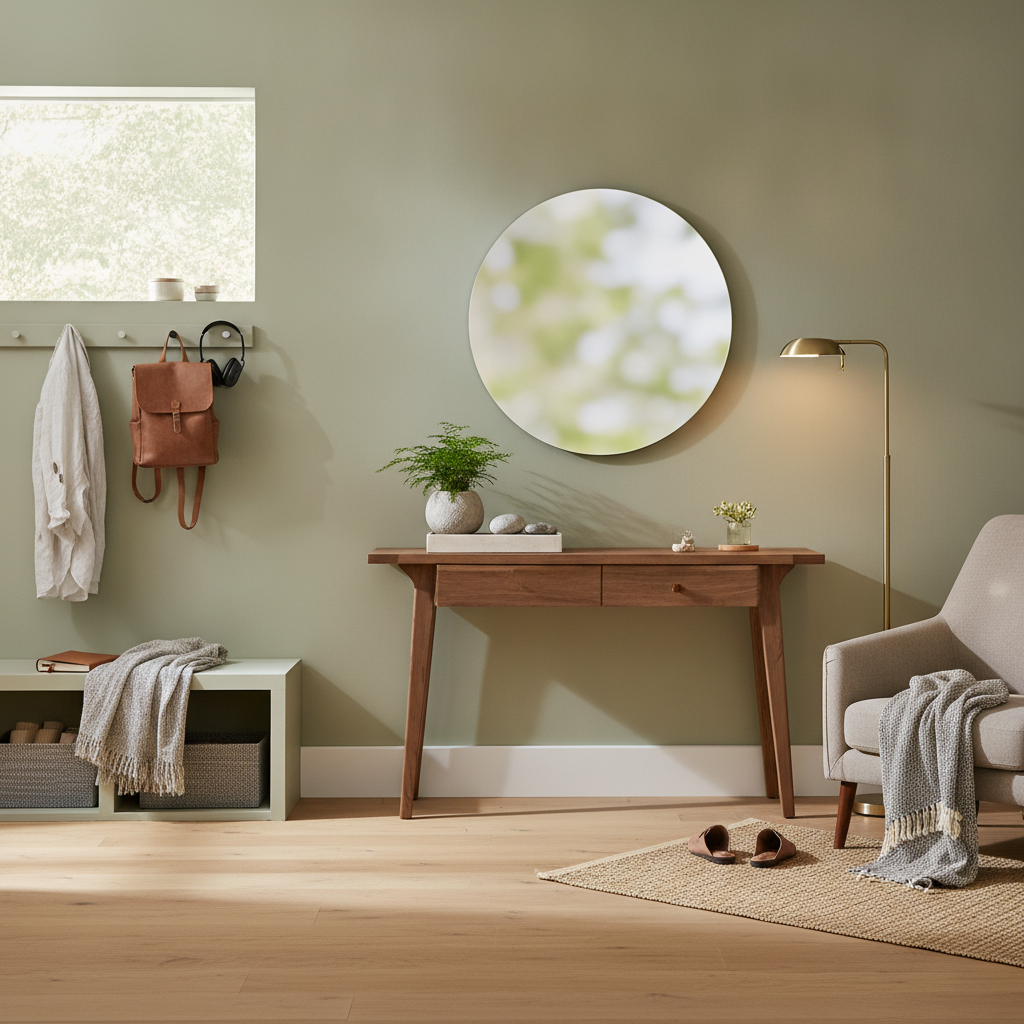
Clutter at the entry sends a signal of unfinished business, which keeps your stress response lightly activated even when you're technically home. Designate a specific spot for work items — a bag hook, a shelf, a basket — so your work gear has a home that feels separate from the rest of your space. IKEA's KALLAX shelving units work well here because they allow for closed-storage bins that physically hide work items from view. When you can't see the laptop bag or the work folder, your brain gets a cleaner signal that the professional part of your day has been set aside.
Add a Sensory Reset to Your Arrival Routine
Sensory cues are surprisingly powerful anchors for mental state changes. A small diffuser with eucalyptus or cedarwood oil, a textured mat underfoot, or even a specific playlist that starts playing when you open the door can all act as transition signals. The key is consistency — using the same sensory element every day trains your nervous system to associate that cue with unwinding. Apps like Spotify allow you to set automated playlists, making the audio shift happen without any extra effort on your part. Over time, the scent or sound alone begins to carry the psychological weight of the transition.
Create a Physical Ritual That Marks the Shift
Rituals work because they give the brain a concrete marker — a before and after. Changing your shoes is a classic one, and there's a reason it's embedded in cultures around the world. Swapping work shoes for a comfortable pair of slippers or sandals in the entryway creates a small but meaningful physical action that signals a change in role. You might also hang a light jacket or swap out a watch. The specific ritual matters less than the consistency of it. When you do the same thing every day in that entry space, your body starts to relax before you've even sat down.
Bring in One Element That Has Nothing to Do With Work
A small plant, a piece of art you love, or even a rotating collection of books on a narrow shelf can shift the energy of an entry zone. The goal is to introduce something that belongs purely to your personal life — something that greets you on your own terms rather than as a professional. Many people find that a low-maintenance plant like a pothos or a snake plant adds life to the space without demanding attention. Neighborhoods like Brooklyn's Park Slope and San Francisco's Noe Valley are full of entryways where residents have done exactly this — tiny, human touches that make coming home feel like arriving somewhere intentional.
Dim the Lighting as Part of Your Arrival
Bright overhead lighting keeps your alert system running. A warmer, softer light in your entry zone can signal the shift from high-performance mode to rest mode almost immediately. Smart bulbs from brands like Philips Hue allow you to set a specific scene that activates automatically based on time of day. Even without smart technology, a simple lamp with a warm-toned bulb on a timer achieves the same effect. The shift from cool, bright light to something softer is a physiological nudge that pairs well with the other sensory elements in your decompression space.
Build a Micro-Pause Into Your Arrival
Most people walk in and immediately start doing something — checking on dinner, scrolling their phone, responding to a family member's question. Building even a two-minute pause into your entry ritual can prevent that rapid re-engagement with a new set of demands. A small bench or chair in the entryway isn't just practical — it's an invitation to sit for a moment, breathe, and let the transition happen. Setting your phone face-down on arrival and simply taking a few slow breaths while you change your shoes costs nothing and changes everything about how you feel ten minutes later.
Let the Space Evolve With Your Needs
A decompression zone isn't a one-time project. Your work stress patterns, your schedule, and your home life all shift across seasons and life stages. Revisit your entry setup every few months and ask whether it's still doing its job. Maybe the diffuser has become background noise that you no longer register. Maybe a new stressor at work means you need a stronger visual cue to mark the divide. Treating the space as a living, adjustable tool — rather than a decorating project you complete once — keeps it genuinely effective rather than just aesthetically pleasing.
Your front door is one of the most underused tools for mental health in your home. A few thoughtful adjustments to that entry zone can shorten the mental commute between work mode and home mode, reduce the ambient stress that bleeds into your evenings, and help you actually arrive where you are. Start with one change — a lamp, a ritual, a basket for the laptop — and notice how even that small shift begins to reframe the moment you walk through the door.