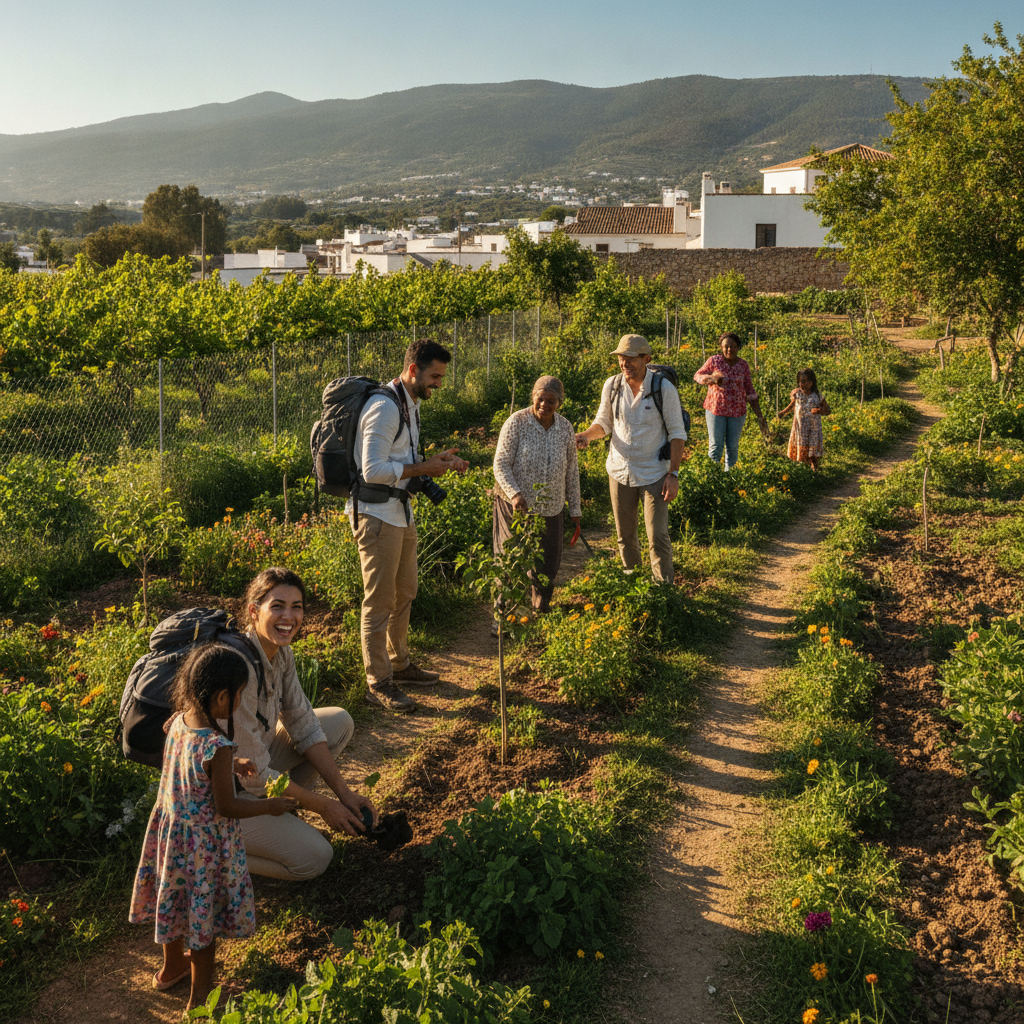
Travel has a way of shifting perspective — but only if you give it the right conditions. Most itineraries are built around what you want to receive: the view, the meal, the experience, the photograph. And those things matter. But there's a quieter kind of travel moment, one that doesn't appear in any guidebook ranking, that tends to stay with you long after you've forgotten which museum you visited on day three. Spending half a day contributing something real to the place you're visiting — through a structured volunteer opportunity coordinated by a local organization — changes the lens through which you evaluate everything else on the trip.
The Shift That Happens When You Step Outside the Tourist Frame
When you arrive somewhere as a traveler, there's an invisible membrane between you and the place. You observe, you consume, you move on. That's not a criticism — it's simply how conventional tourism is structured. Volunteer activities, even brief and modest ones, dissolve that membrane in a way that sightseeing rarely does. You're not watching the community; you're briefly operating inside it. You're following the instructions of someone who lives there, working alongside people who care about outcomes, and contributing effort toward something that will persist after your flight home.
The psychological effect of this is significant and often surprising. Travelers who spend even a few hours doing something genuinely useful — planting in a community garden, sorting donations at a local food bank, helping with a coastal cleanup, assisting at a youth education program — frequently report that this half-day reshapes how they think about the entire journey. Days that felt like pleasant but forgettable tourism suddenly feel like they carried more weight. The contribution creates a kind of anchor, a reference point around which other memories reorganize themselves.
Platforms like Volunteer World and GoOverseas make it straightforward to identify vetted organizations at your destination before you leave home. Both aggregate opportunities by city and duration, which means you can filter for half-day commitments that fit neatly between a morning arrival and an afternoon of free time. For trips within North America, VolunteerMatch is particularly reliable for connecting travelers with established nonprofits that welcome short-term helpers without requiring advance training or lengthy onboarding.
Timing It Mid-Trip Rather Than at the Start or End
Where you place the volunteer activity within your trip matters more than most travelers expect. Scheduling it on day one, before you've settled into the rhythm of the place, often means you're still operating in logistics mode — still thinking about the hotel, the bag that didn't arrive, the time zone. Saving it for the final day runs a different risk: you're already mentally packing, already halfway home, and the emotional resonance of the experience doesn't have time to color anything else.
Mid-trip placement — ideally somewhere between the one-third and halfway mark — gives the experience maximum influence over what follows. You return from the volunteer morning or afternoon with a different set of eyes. The neighborhood café where you stop for lunch carries more texture. The conversations you have feel more grounded. You start noticing the fabric of daily life in ways that weren't accessible to you before. That shift in noticing is not accidental; it's the direct result of having been briefly responsible to the place rather than simply present in it.
When coordinating logistics, the All Trails app — while primarily used for outdoor navigation — can be unexpectedly useful for locating conservation volunteer sites near natural areas at your destination. Many regional parks and trail organizations list cleanup and restoration volunteer days through the app's community section, which often surfaces opportunities that don't appear in broader volunteer directories. Cross-referencing this with a quick search through Meetup, where local environmental and social groups often post community service events open to visitors, can surface timing-specific opportunities that align with your exact travel window.
What the Experience Actually Does to Your Evaluation of the Journey
There's a well-documented tendency in travel to measure a trip's success by its peak moments — the best meal, the most dramatic view, the unexpected discovery. This is a reasonable but incomplete framework. Contribution adds a different dimension to the evaluation: meaning. And meaning, it turns out, is more durable than pleasure. A stunning view fades in memory at roughly the same rate as any other visual experience. A morning spent hauling mulch with a park restoration team in Christchurch, or sorting supplies at a community center in Medellín, or assisting with a reforestation effort outside Porto — these carry a narrative weight that holds up differently over time.
You also tend to form at least one genuine connection during a volunteer session that you simply cannot replicate through conventional tourist interaction. The person supervising the project, a fellow volunteer who turns out to be a local teacher, the organization coordinator who gives you a ten-minute explanation of the neighborhood's history — these are not transactional exchanges. They're conversations between people doing something together, and they follow a completely different script than the interactions you have when you're a customer or a visitor. That relational texture becomes part of how you remember the destination.
As more travelers look for ways to build meaning into their journeys rather than simply accumulating destinations, local organizations are getting better at welcoming short-term contributors thoughtfully. The trend is toward more structured half-day formats with clear briefings, defined tasks, and genuine impact — rather than the performative voluntourism that drew criticism in earlier years. The best programs treat your time as a real resource, give you meaningful work, and send you back to your trip with something that quietly changes what the rest of it means. Starting that search a few weeks before departure, rather than the night before, gives you the best chance of finding an opportunity that's well-organized, well-timed, and genuinely worth the half-day you'll give it.