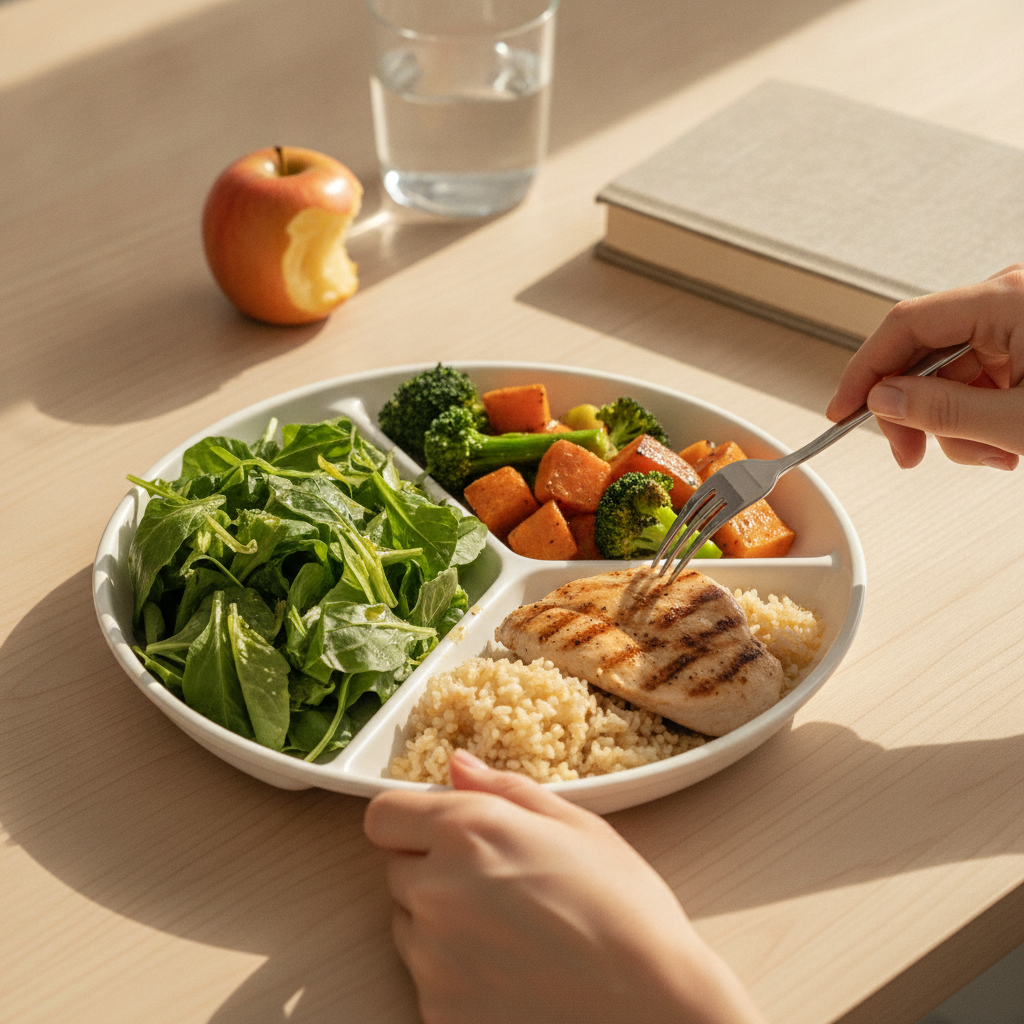
The sequence in which food enters the body during a meal turns out to matter far more than most people realize. While nutrition conversations typically focus on what to eat — macros, calories, food quality — the order in which those foods are consumed can meaningfully alter how the body processes glucose, how quickly blood sugar rises, and how sharply it falls. This isn't a minor footnote to healthy eating; it's a physiological reality that researchers and clinicians have increasingly come to take seriously, and it offers a practical lever that requires no special ingredients, no restrictive plans, and no additional expense.
How Does Eating Sequence Affect Blood Sugar?
When carbohydrates are consumed, they're broken down into glucose and absorbed quickly through the small intestine, triggering a corresponding rise in blood sugar. The speed and height of that rise depend partly on how much fiber, fat, and protein are present in the digestive system at the same moment. When vegetables, proteins, or fats are eaten before carbohydrates, they create a kind of physiological buffer — slowing gastric emptying, coating the intestinal lining, and triggering hormones like GLP-1 that moderate the rate at which glucose enters the bloodstream. The result is a flatter, more gradual glucose curve compared to eating carbohydrates first.
What Role Does Fiber Play When Eaten First?
Fiber-rich vegetables eaten at the beginning of a meal have an outsized effect on what happens next. Foods like broccoli, leafy greens, and cucumbers are high in soluble fiber, which forms a gel-like substance in the digestive tract that physically slows the movement of food toward the small intestine. This delay means that when the carbohydrate-heavy portion of a meal arrives — pasta, rice, bread — it encounters a digestive environment that's already primed to absorb glucose more slowly. Even modest portions of fiber-forward foods, consumed as a first course rather than alongside everything else, appear to blunt the post-meal glucose spike in measurable ways.
How Does Protein Before Carbohydrates Change the Body's Response?
Protein, when consumed before carbohydrates, stimulates the release of insulin and incretin hormones earlier in the digestive process — essentially giving the body a head start on managing the glucose load that's coming. This pre-stimulation means insulin is already circulating and active when carbohydrates begin breaking down, rather than playing catch-up after a glucose spike has already occurred. The timing advantage is subtle but consistent. Eating chicken, eggs, legumes, or even a small serving of Greek yogurt before the grain or starch component of a meal creates a more coordinated metabolic response. The peak glucose level tends to be lower, and the return to baseline tends to be smoother.
Why Does Fat Also Slow Glucose Absorption?
Dietary fat slows gastric emptying — the rate at which the stomach releases its contents into the small intestine — and this mechanical delay has direct consequences for blood sugar management. A meal that includes olive oil, avocado, or nuts consumed before or alongside starchy foods results in a more extended digestion timeline. This doesn't mean loading up on fat is categorically beneficial, but it does help explain why certain traditional eating patterns, like the Mediterranean diet practiced across regions including Tuscany and coastal Greece, naturally produce more moderate post-meal glucose responses. In those cuisines, olive oil and vegetables typically arrive before or alongside bread and pasta, not after.
What Happens When Carbohydrates Are Eaten First?
Consuming refined carbohydrates at the start of a meal — eating bread before a salad, or beginning with rice while vegetables wait — removes the buffering effects that fiber, protein, and fat provide. The digestive tract is empty, gastric emptying is fast, and glucose floods into the bloodstream with relatively little resistance. The resulting spike triggers a strong insulin response, which can occasionally overshoot and produce a rapid drop in blood sugar — the familiar post-meal energy crash that many people experience without connecting it to eating sequence. Apps like Levels, which track continuous glucose monitoring data, have contributed to broader awareness of these patterns among health-conscious users.
How Can You Apply This at Your Next Meal?
Applying the research doesn't require rethinking an entire diet or following a rigid protocol. A simple reordering of what you eat when is enough to start seeing a difference. Begin meals with non-starchy vegetables — a side salad, steamed greens, raw cucumbers — before moving to protein and fat, and save starchy or sugary foods for last. At a restaurant, ask for the bread after the salad arrives rather than before. At home, serve vegetables first as a small starter rather than alongside everything else. If you're eating at a bowl-style restaurant like Sweetgreen, building the meal so greens and proteins come before the grain base reflects the same principle. Even small consistent changes to sequence, practiced habitually, add up to a meaningfully different metabolic experience over time.
The broader insight here is that meals are not just a collection of nutrients but a timed sequence of chemical signals that the body interprets moment by moment. How food is ordered, not only what food is chosen, shapes the physiological response that follows. For anyone looking to support steadier energy, reduce the intensity of post-meal crashes, or simply understand why some meals feel better than others, eating sequence offers a surprisingly accessible and evidence-informed place to start.