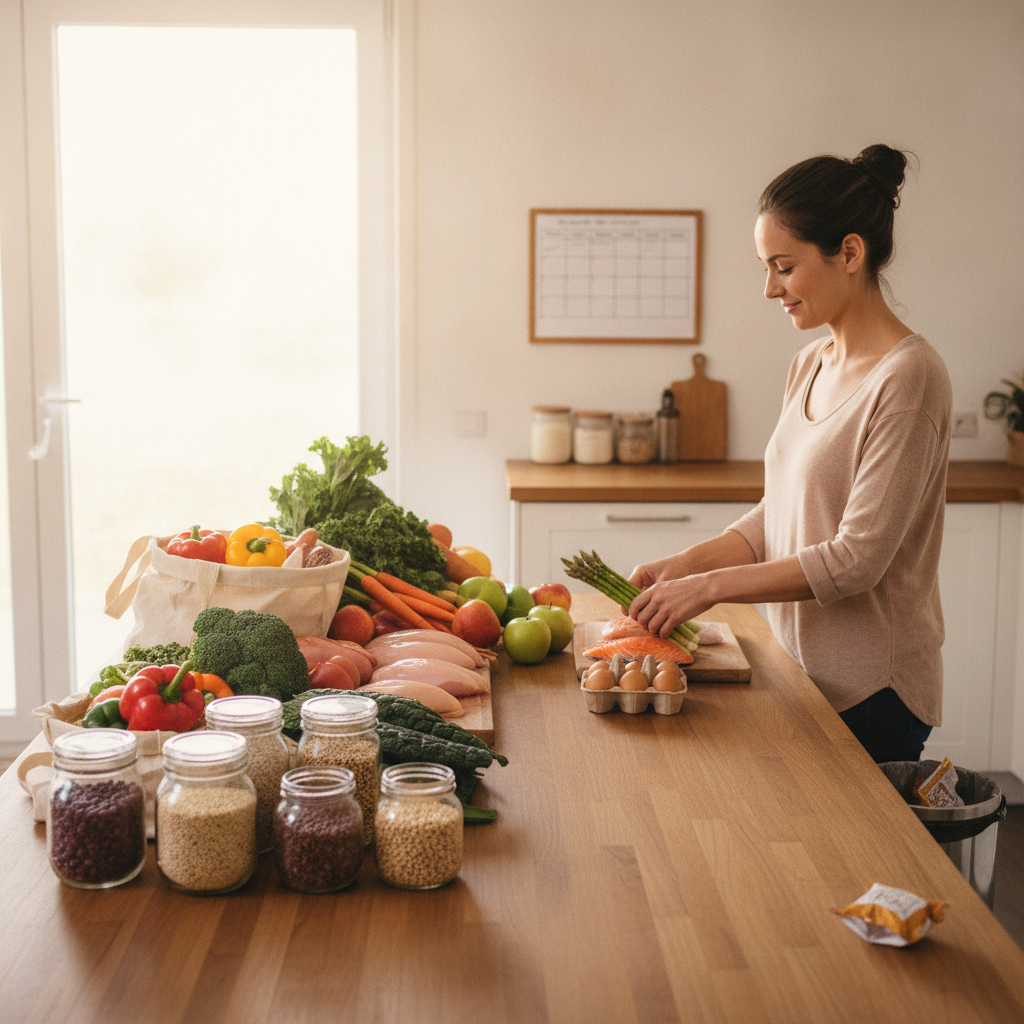
Most nutritional shortfalls don't come from eating badly — they come from shopping without a system. When you walk into a store without a clear framework, you tend to buy what looks appealing, what's on sale, or what you remember running out of. The result is a cart that leans heavily on familiar staples while quietly skipping entire food categories your body actually needs. A fixed weekly grocery template — a consistent structural blueprint that organizes your shopping by category rather than by whim — changes that pattern in ways that accumulate meaningfully over time.
Building Your Template Around Nutritional Categories
The most effective grocery templates aren't organized by meal or by aisle — they're organized by nutritional category. That means your template always includes a slot for leafy greens, a slot for cruciferous vegetables, one for legumes, one for quality protein, one for whole grains, one for healthy fats, and so on. When you shop from categories rather than cravings, you stop accidentally skipping the foods your body needs most. Apps like Paprika or AnyList make it easy to save a template you can reuse every week, filling in the specific items within each category depending on what's in season or on offer.
Why Open Lists Invite Nutritional Drift
An open shopping list — one where you jot down whatever comes to mind before heading to the store — tends to reflect your recent eating habits rather than your nutritional needs. If you've been eating a lot of pasta this week, you'll likely write down more pasta. If you haven't thought about zinc or magnesium, you won't write down pumpkin seeds or dark leafy greens. Over weeks and months, this drift compounds. Nutritional gaps build quietly, and you may not notice until you feel persistently low-energy, struggle with recovery from exercise, or find your sleep quality declining without obvious cause.
The Impulse Purchase Problem Is Structural, Not Willpower-Based
Grocery stores are designed to encourage unplanned purchases. End-cap displays, strategically placed snack aisles, and the positioning of premium items at eye level all exploit the open-ended shopping mindset. When you enter a store with a fixed template, your attention narrows. You're checking categories off a structured list rather than scanning shelves for inspiration. Research in consumer behavior consistently shows that shoppers with defined lists spend less time in stores and make fewer unplanned additions to their carts. Trader Joe's and Whole Foods are particularly effective at triggering impulse buying through novelty products — a template helps you admire them without automatically adding them.
Designing a Template That Holds Up Week After Week
A grocery template works best when it's built around your actual weekly cooking rhythm rather than an idealized one. If you realistically cook four nights a week, design your template for four dinners, not seven. Include a protein for each planned meal, a vegetable pairing, a grain or complex carbohydrate, and a snack category that you cycle through predictably. The template should feel like a form you fill in, not a rigid prescription. Flexibility within structure is what makes it sustainable — you're always buying broccoli or cauliflower or Brussels sprouts, not always the same one.
How Repetition Supports Micronutrient Coverage Over Time
One underappreciated benefit of a fixed template is that it creates nutritional repetition in a useful sense. When your template always includes a dark leafy green, a legume, a nut or seed, and a fermented food, you cover a wide spectrum of vitamins, minerals, and fiber sources without tracking every nutrient individually. This is especially important for micronutrients that are easy to overlook — magnesium, potassium, folate, and vitamin K among them. A template essentially automates a level of nutritional coverage that would otherwise require active, exhausting attention every week.
Using the Template to Protect Your Food Budget
Fixed templates reduce grocery spending not through restriction but through intention. When you know exactly what you're buying, you can assess your pantry before you leave home and avoid duplicate purchases. You're also less likely to buy perishables that won't get used, which is one of the most common ways household food budgets quietly erode. Services like Instacart allow you to save recurring grocery lists, which pairs well with a template approach — you can review and adjust your standing order each week rather than rebuilding it from scratch, reducing both time and cost.
Adjusting the Template Seasonally Without Losing Its Structure
A well-designed template remains stable in structure but flexible in content. The category for leafy greens might be arugula in spring, spinach in summer, and kale through the winter months. Seasonal adjustment keeps your diet varied and nutritionally rich without requiring you to rethink your entire shopping approach each time produce prices or availability shift. Farmers markets like those run through the USDA's Local Food Directories can be a useful complement to your fixed supermarket template — visit them for your produce category specifically, then complete the rest of your template at a regular grocery store.
Making the Template a Household Practice Rather Than a Personal One
When a grocery template is shared across a household, it reduces the friction of deciding what to buy and eliminates the redundant conversations that happen when multiple people shop independently. A shared digital list — through something like Google Keep or the Reminders app — means anyone in the household can update the weekly quantities within each category without altering the structure itself. This shared ownership also distributes the mental load of nutritional planning more evenly, which matters particularly in households where one person has historically carried that cognitive burden alone.
A fixed weekly grocery template doesn't remove variety from your diet — it protects the variety that actually matters. By organizing your shopping around nutritional categories rather than open-ended cravings, you consistently fill the gaps that unstructured shopping leaves behind, spend less money on purchases you didn't plan for, and spend less mental energy deciding what to buy each week. The structure does the thinking, so you can focus on cooking and eating well.