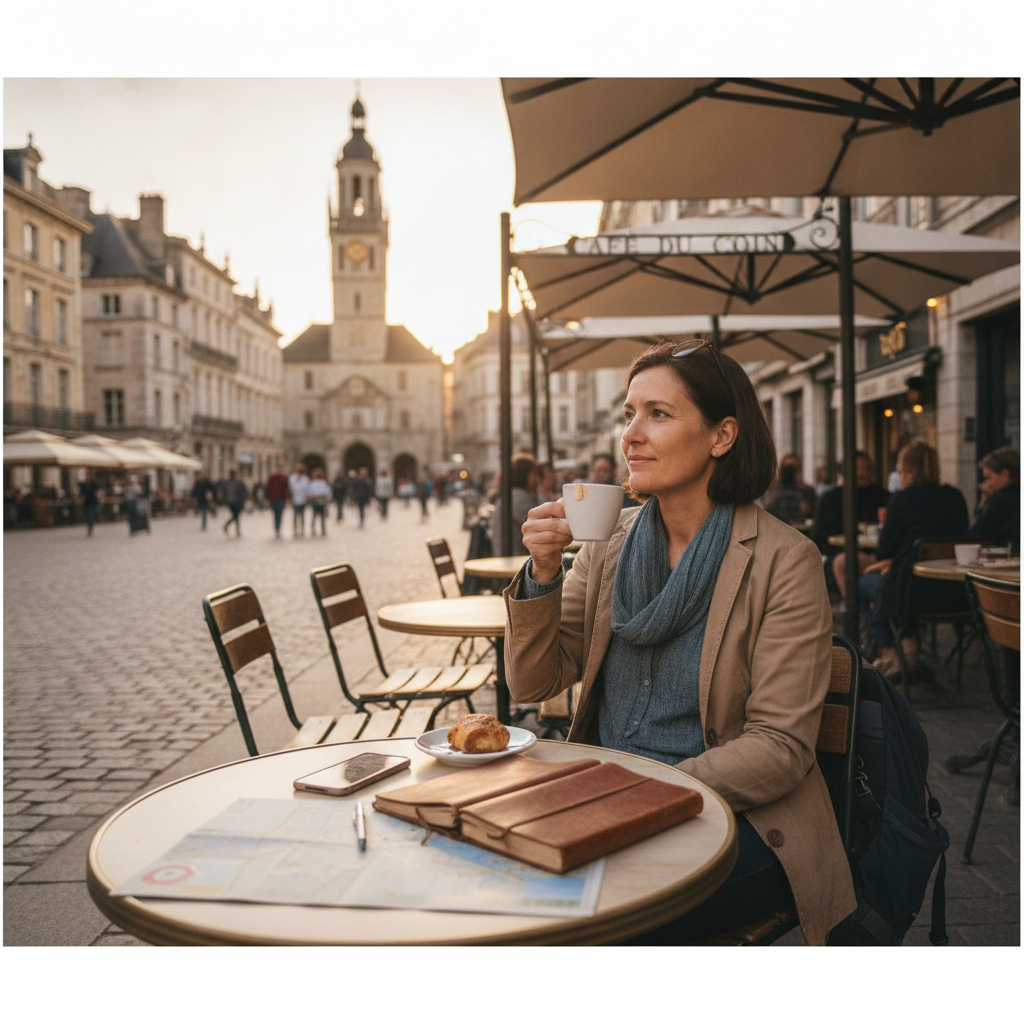
Travel is genuinely exciting — and genuinely exhausting. Every hour of a trip presents a small stack of decisions: where to eat, which direction to walk, whether to sit or keep moving. Individually, none of those choices feels significant. Collectively, they grind you down faster than any amount of sightseeing should. By midweek on most trips, the enthusiasm that carried you through day one has quietly leaked away, replaced by a low-grade irritability that has nothing to do with the destination and everything to do with the volume of decisions you've been making since you landed.
One of the most underrated fixes for this is deceptively simple: pick one place and return to it every day. A corner café, a shaded square, a particular bench near a fountain. Make it yours. What follows is why that single habit changes the entire texture of a trip.
Your Brain Needs a Place It Already Knows
Decision fatigue isn't just about being tired. It's what happens when your cognitive resources deplete from the constant low-level processing of new environments. When everything around you is unfamiliar, your brain stays in a mild state of alert, scanning for cues and patterns it hasn't catalogued yet. Returning to the same spot each day gives your nervous system a break from that scanning. The sensory details are already filed. The layout is known. You can sit down and simply exist, which is rarer on a trip than most people realize.
Choose the Spot Before You Arrive
The selection itself matters. Don't wait until you're hungry and overwhelmed to find your base — that's exactly when poor choices happen. Before the trip, browse Google Maps Street View, check reviews on Tripadvisor, or scan travel forums for cafés with outdoor seating or squares with good foot traffic. In Lisbon, that might mean identifying a spot in Mouraria before you land. In Oaxaca, it could be a particular corner of the Zócalo. Choosing in advance means you arrive with one decision already made, and that single act reduces the mental load of day one considerably.
Make It a Real Ritual, Not Just a Stop
The psychological effect only fully activates when the return feels intentional rather than accidental. Order the same coffee or drink you had on your first visit. Sit in the same general area if you can. Spend at least twenty minutes there rather than passing through. The repetition is the point. Over two or three visits, you'll notice that your body literally relaxes faster when you arrive, because your brain has already categorized the environment as safe, known, and comfortable. That relaxation response is the psychological home base doing its work.
Let It Anchor Your Day's Structure
One of the quiet benefits of a fixed return point is that it organizes your day without requiring a rigid schedule. You can structure mornings around arriving at the spot for breakfast, use midday visits to regroup between activities, or end each evening there before heading back to your accommodation. Places like the Piazza Santa Croce in Florence or a particular bench in Amsterdam's Vondelpark have served this function for countless travelers without those travelers ever consciously naming what the habit was doing for them. When your day has a natural anchor, the hours around it feel less formless.
Use It as a Decision-Free Recovery Zone
When the trip starts to feel overwhelming — and at some point, it will — your home base is where you go without deliberating. No consultation with your travel companion, no scrolling through options, no second-guessing. You simply go. This is genuinely useful because it removes one more decision from a moment when your capacity for decisions is already depleted. The place works precisely because the choice to go there requires almost no effort. You've already decided, days ago, that this is the spot. That prior commitment does real work when your current self is running low.
Notice What You Learn by Returning
A fixed spot teaches you things that a single visit never could. You start to notice the rhythms of a place — when the local market vendors pack up, which streets fill with school children at a particular hour, how the light changes across the same square from morning to late afternoon. This kind of layered observation is what experienced travelers mean when they talk about actually getting to know a place rather than photographing it. The knowledge accumulates without effort, simply because you keep showing up.
Keep It Low-Commitment and Low-Cost
Your home base doesn't need to be a stylish café with a famous pastry. A plastic chair at a neighborhood bar, a public bench in a shaded corner, a step in front of a quiet church — these work just as well, often better. The criteria are simple: you feel comfortable there, it's easy to reach from your accommodation, and returning doesn't require a reservation or a budget decision. A bottle of water and a view is enough. The comfort comes from familiarity, not from the quality of the venue itself.
Communicate the Spot to Anyone Traveling With You
If you're traveling with a partner, friend, or family member, the shared home base serves a secondary function — it becomes the default meeting point when plans diverge. No need to coordinate complicated rendezvous instructions when you can simply say "meet at our café at four." Apps like WhatsApp make it easy to share a pin, but the value is in having a pre-agreed place that neither person has to negotiate in the moment. That small social shortcut reduces friction and prevents the low-simmering stress that comes from trying to regroup in an unfamiliar city.
As trip design continues to shift away from packed itineraries toward slower, more intentional travel, the idea of a personal anchor point is likely to become more common and more deliberate. Travelers are increasingly aware of how mental load affects enjoyment, and the home base habit is one of the most elegant tools available — requiring no app, no planning service, and no budget. The next time you're mapping out a trip, consider building the base before you build the itinerary. Everything else tends to organize itself more naturally once that one constant is in place.