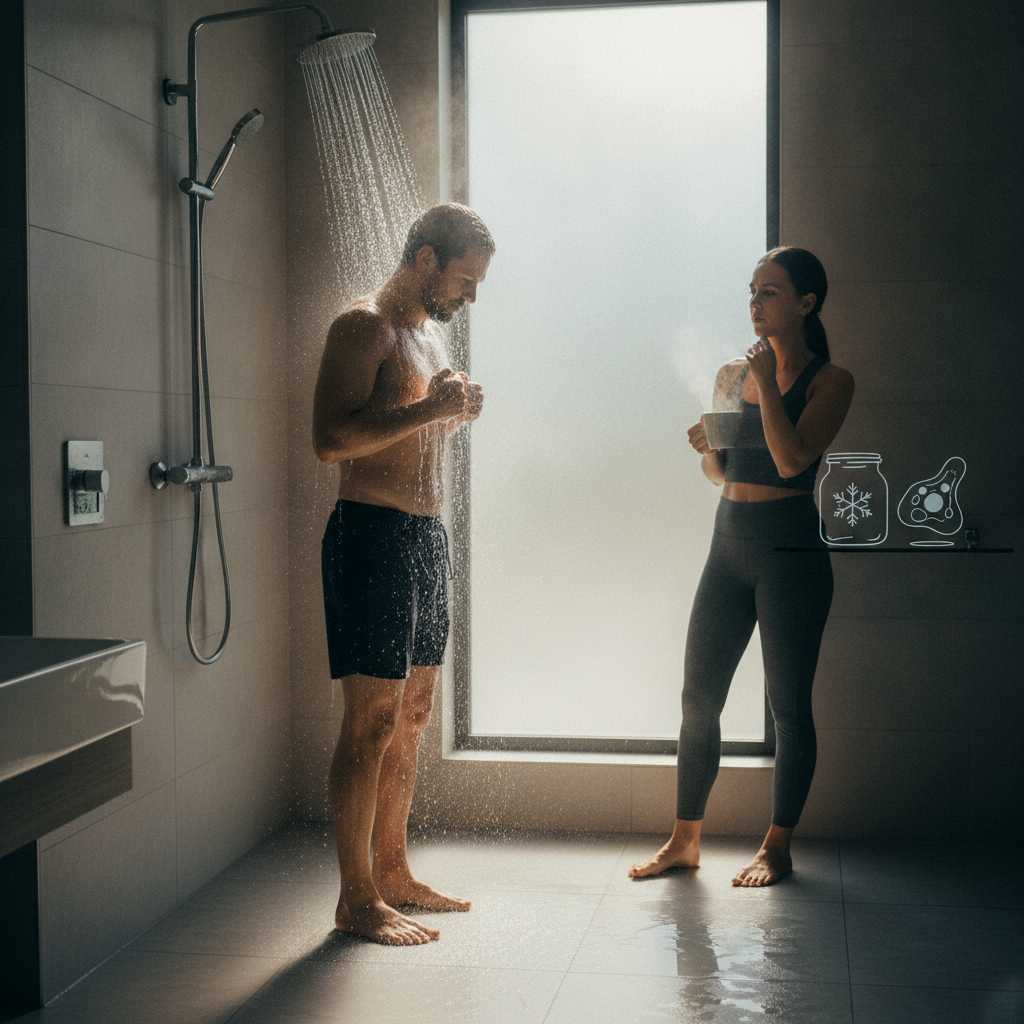
Most mornings arrive with a familiar kind of inertia — the alarm sounds, the mind is willing, but the body needs convincing. You're already stepping into the shower anyway, so the question worth asking is whether a small, deliberate change to that routine could actually shift how awake you feel and how well your immune system functions throughout the day. The answer, based on what physiology research consistently shows, is yes — and the adjustment requires far less willpower than you might expect.
Start by Finishing Your Shower With Cold Water
The simplest entry point into cold exposure is the contrast shower — finishing your regular warm shower with a 30-to-60-second burst of cold water. You don't need a separate ice bath, a specialized protocol, or any equipment beyond what you already have. The cold at the end acts as a punctuation mark for your nervous system, triggering a sharp release of norepinephrine, the neurotransmitter most associated with focus and arousal. Apps like Wim Hof's guided programs can help you build the habit systematically if you find the mental preparation useful.
Ease In Over the First Week Before Expecting Results
Expecting immediate results in the first morning is a setup for frustration. Cold exposure has cumulative effects, meaning the physiological adaptations — including changes to circulation, stress hormone calibration, and brown fat activation — build gradually over days and weeks. Start with 15 seconds of cold at the end of your shower and extend by 10-to-15 seconds every two or three days. By the end of your first week, most people can comfortably manage 45 to 60 seconds, which is the threshold where the alertness response becomes reliably noticeable. Patience here is a practical strategy, not just patience for its own sake.
Understand What's Actually Happening to Your Body
When cold water hits your skin, your body interprets it as a mild stressor and responds with a controlled stress response. Norepinephrine levels can increase substantially with even brief cold exposure, and this chemical shift is what drives the feeling of sharpened alertness that follows. Separately, cold exposure prompts the immune system to upregulate certain signaling proteins involved in inflammation monitoring and pathogen defense. These aren't dramatic, illness-preventing effects on their own, but over time they contribute to a more responsive and better-calibrated immune baseline. Thinking of it as immune system exercise — rather than a cure — keeps expectations grounded and motivation intact.
Breathe Deliberately During the Cold Phase
The instinctive reaction to cold water is to gasp and hold the breath, which amplifies the stress response in an unhelpful direction. Practicing slow, controlled exhales during the cold phase — exhaling longer than you inhale — activates the parasympathetic branch of the nervous system, keeping the experience stimulating without tipping into panic. Breathwork approaches like box breathing or the extended exhale technique used in programs from brands like Othership train this response effectively. What you're building is the ability to remain calm under mild physical stress, which is itself a skill that transfers to cognitive performance during demanding parts of your day.
Match the Cold Duration to Your Actual Morning Schedule
One of the most common reasons people abandon new morning habits is that the habit expands to crowd out everything else. Cold exposure doesn't need to take more than 60 to 90 seconds to produce measurable alertness benefits. If your morning is tight, keep the cold phase short rather than skipping it entirely. Consistency across the week matters far more than maximizing duration on any single day. The immune and alertness effects compound through regularity, not intensity — 30 seconds every morning for a month outperforms three minutes once a week without question.
Track How Mornings Feel Before and After the Change
Subjective energy tracking is an underused tool in habit-building. Before starting cold exposure, spend three days rating your alertness on a simple 1-to-10 scale at 30 minutes and 90 minutes after waking. Then continue the same tracking after you introduce cold exposure. Most people notice the contrast clearly within 10 to 14 days — mornings with cold endings score meaningfully higher in the first 30 minutes. Apps like Bearable or a basic notes log work well for this. Seeing your own data makes the habit feel evidence-based rather than anecdotal, which strengthens the motivation to continue.
Pair Cold Exposure With Morning Light for Compounding Benefits
Cold exposure and morning light exposure both trigger alertness through different but complementary pathways. Cold activates norepinephrine and brown adipose tissue; morning light suppresses melatonin and anchors your circadian rhythm. Combining both in the same morning window — stepping outside briefly after your shower — stacks two low-effort habits with distinct physiological effects. Research institutions studying circadian biology consistently identify morning light as one of the highest-leverage daily inputs for mood regulation and sleep quality. The combination doesn't require extra time if you place the outdoor light exposure during a walk to get coffee or while waiting for your car to warm up.
Be Honest About Which Days You Should Skip It
Cold exposure is a mild stressor by design, which means there are mornings when adding any stressor is the wrong call. If you're running a fever, recovering from illness, or slept fewer than five hours, skipping the cold phase and taking a warm, restorative shower is the more intelligent choice. The immune signaling benefits of cold exposure come from a well-rested system responding to a manageable challenge — not from a depleted one being pushed further. Recognizing which mornings call for recovery rather than stimulation is part of making the habit sustainable over months rather than weeks.
The real value of adding brief cold exposure to your existing shower routine isn't found in any single morning — it accumulates across weeks of consistent practice. The alertness response sharpens, the immune system becomes more responsive to its own signaling, and the daily habit of choosing a small discomfort trains a kind of calm resilience that shows up in other areas of life too. Because the habit attaches to something you already do every morning, the barrier to maintaining it stays low even when motivation fluctuates. Small, repeated exposures to cold water turn an ordinary shower into one of the most efficient performance and wellness inputs your day can include.