There is a particular kind of disorientation that settles over travelers who spend their first three days in the wrong part of a city. The streets are clean and well-signed, the restaurants have menus translated into four languages, and the hotel lobby smells faintly of the same diffuser blend found in hotel lobbies everywhere. Everything is accessible, and yet nothing feels real. The city exists just beyond reach — glimpsed from the window of an air-conditioned tour bus or filtered through the curated pleasantness of a neighborhood designed to be experienced rather than lived in. This is the quiet cost of the tourist quarter, and it has less to do with crowds or prices than with a more fundamental mismatch between where a visitor sleeps and where a city actually breathes.
The Living Logic of a Central Market
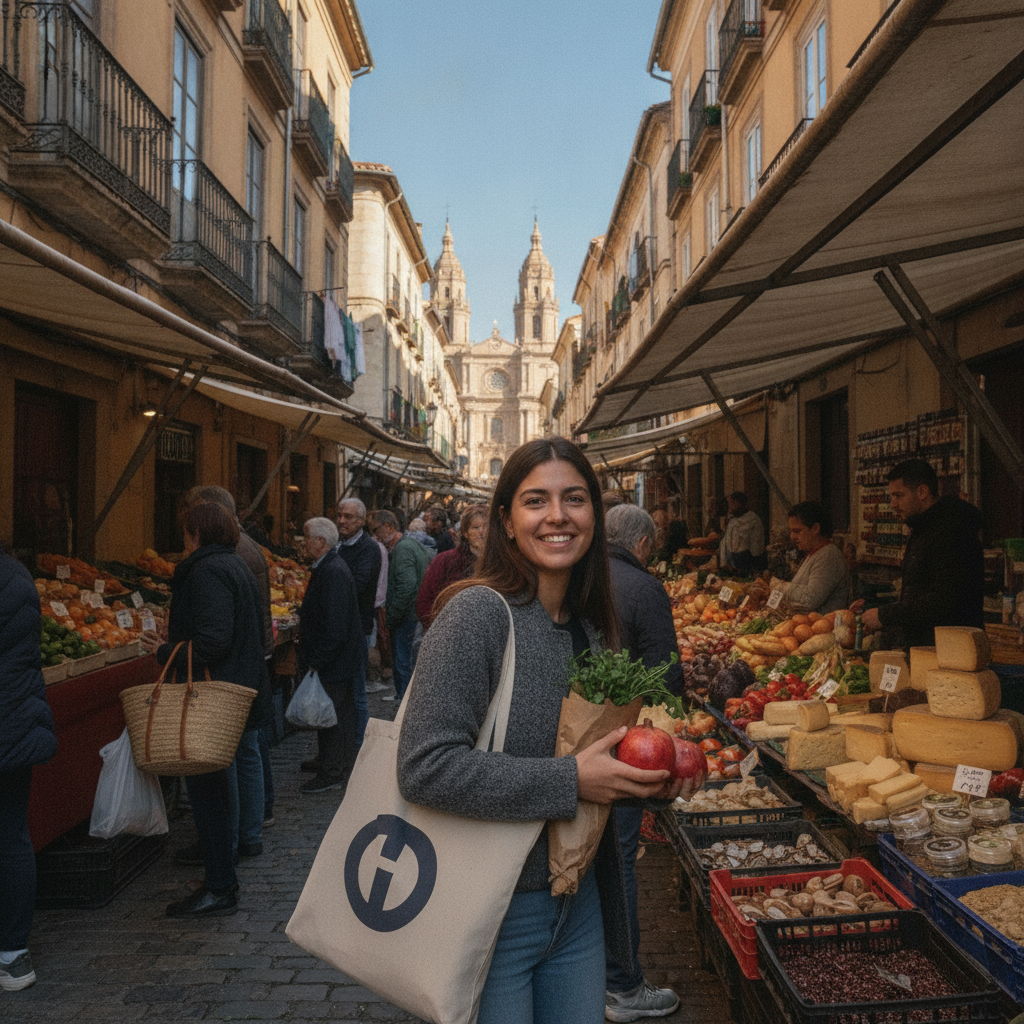
Every city of any age has a mercado, souk, bazaar, or covered market at its functional heart — a place where the rhythms of daily commerce have organized the surrounding streets for generations. In Istanbul, it's the area radiating outward from the Grand Bazaar toward Eminönü; in Marrakech, the medina surrounding Jemaa el-Fna; in Mexico City, the barrios flanking La Merced. These aren't attractions in the conventional sense. They are infrastructure — the places where produce arrives before dawn, where spice merchants have occupied the same stall for decades, and where the surrounding streets fill with the particular energy of people who have somewhere to be. When accommodation is chosen within walking distance of this kind of center, something changes almost immediately in how a traveler relates to the city. The mornings have texture. There's somewhere obvious to go before the day's plans begin.
The tourist quarter operates on a fundamentally different logic. Its commercial life is organized around the visitor's gaze rather than the resident's need. The souvenir shops open late and close early. The restaurants aim for broad palatability rather than local specificity. Even the architecture, however genuinely beautiful, is presented as a backdrop rather than a lived environment. Neighborhoods like Prague's Staré Město or Barcelona's Gothic Quarter contain extraordinary history, but staying within their tightest tourist corridors can leave a traveler feeling oddly passive — a viewer rather than a participant. The density of other visitors creates a kind of social mirroring that actually reinforces the outsider feeling rather than dissolving it.
What Proximity to Daily Life Actually Provides
Being near a working market area offers something that no guided tour can replicate: a reason to move through ordinary space at ordinary times. When the nearest good coffee is at a counter frequented by market workers finishing their early shift, the traveler absorbs the cadence of a local morning simply by being present. When the nearby streets are organized around the sale of hardware, fabric, or wholesale cooking supplies rather than refrigerator magnets, the visual environment shifts the traveler's role from consumer of place to observer of it. This is the mechanism by which a sense of belonging forms — not through study or intention, but through repetition of small, unremarkable daily acts in the same spaces where locals perform them.
This is what urban anthropologists call *quotidian immersion* — engagement with the ordinary rather than the exceptional. It doesn't require fluency in the local language or deep cultural knowledge. It requires only physical presence in the right kind of space. A traveler staying near Santiago de Chile's Mercado Central, for instance, will find that the surrounding streets have a working-week pulse that's entirely absent from the polished plazas of the Barrio Lastarria tourist enclave a kilometer away. The distinction isn't about which neighborhood is more beautiful; it's about which one is inhabited by a daily life that a visitor can quietly join.
The Practical Geometry of a Market-Adjacent Stay
There are practical dimensions to this choice that reinforce the cultural ones. Market-adjacent neighborhoods tend to have higher concentrations of neighborhood restaurants — the kind serving a fixed *menú del día* (a set daily lunch menu common across Spain and Latin America) priced for regulars rather than tourists. Grocery shopping becomes genuinely pleasurable rather than a logistical necessity, since the same stalls selling to residents offer produce, bread, and prepared items at prices that reflect local economics. Transport connections tend to be strong, since markets have historically anchored transit routes around themselves. And accommodation prices, while not always dramatically lower, often reflect a less inflated market than the zones adjacent to major tourist sights.
The geometry also makes spontaneous discovery more likely. When the surrounding streets aren't organized around managing tourist traffic, they retain the useful complexity of a real neighborhood — the tailor next to the pharmacy next to the woman selling tamales from a cart. These adjacencies are the product of organic urban growth rather than curation, and they reward wandering in a way that the tourist quarter, however charming, rarely does. A traveler who finds a favorite lunch spot in this kind of neighborhood and returns to it on a second and third visit will find, almost without intending to, that the proprietors begin to recognize them. That recognition — small and unremarkable — is among the fastest routes to feeling temporarily local.
Arriving on the Right Side of the City's Divide
If you're planning a trip where the sense of genuine arrival matters as much as the itinerary itself, the accommodation decision deserves as much attention as the flights. Before booking, spend time with the city's map in a different way than usual — not looking for proximity to the major sights, but locating the working market districts and the neighborhoods that surround them. Apps like Google Maps or Airbnb allow filtering by neighborhood, and a bit of research into where locals actually buy food, run errands, and eat lunch will point you toward the right zones. In cities like Lisbon, that might mean the Mouraria neighborhood over Chiado. In Osaka, Kuromon Ichiba's surrounding streets over the Dotonbori strip. The trade-off, if there is one, tends to be a slightly longer walk to the headline attractions — but you'll arrive at them having already spent the morning feeling like someone who belongs, and that changes everything about how those places feel when you finally reach them.
The disorientation that comes from landing in the wrong neighborhood is subtle enough that many travelers chalk it up to jet lag or first-day awkwardness. But it persists well past the first day when the environment itself is calibrated for observation rather than participation. The traveler who spends their stay near the working market doesn't just see the city differently — they move through it differently, wake up differently, and leave it with a different kind of memory. Not the memory of a place witnessed, but of a place briefly, genuinely inhabited.