Lying awake longer than you'd like is one of the most quietly frustrating experiences of modern life. You're tired, you're horizontal, and yet sleep won't arrive. Most people assume this is just how their body works — but the light environment in the hour before bed has a far greater influence on sleep onset than most people realize. Making deliberate changes to that environment isn't complicated, and the results tend to show up within a few nights.
Why Evening Light Disrupts More Than You Think
Your body's sleep-wake system is exquisitely sensitive to light, particularly in the blue wavelength range that dominates most screens and overhead lighting. When your eyes receive that kind of light in the evening, your brain interprets it as a signal to stay alert — suppressing melatonin production and pushing back the internal clock that would otherwise prepare you for sleep. The effect isn't subtle. Exposure to bright, blue-rich light in the hour before bed can delay sleep onset by anywhere from 30 minutes to over an hour, depending on the intensity and duration of exposure.
Taking Stock of Every Light Source in the Room
The first step in any useful audit is simply looking around. Walk through the rooms you occupy in the hour before bed and notice every source of light — ceiling fixtures, lamps, phone screens, televisions, tablets, and even notification LEDs on devices left charging. Most people are surprised by how many light sources they've stopped consciously noticing. A bedroom that feels dim might still have a television casting significant blue light, a phone screen at full brightness on the nightstand, and an overhead bulb that hasn't been considered in years.
Identifying Which Lights Are Doing the Most Damage
Not all light sources are equally disruptive. Overhead LED fixtures and cool-white bulbs tend to emit the most blue light, making them the highest priority for change. Television screens are a close second, particularly because people often watch them at relatively close range and for extended periods. Phone screens are smaller but held close to the face, which concentrates their effect. Smart bulbs from brands like Philips Hue make it easy to shift the color temperature of fixtures to warmer, amber tones in the evening without replacing the hardware entirely.
Dimming as a Practical First Intervention
Before changing any bulbs or buying any new equipment, experiment with simply dimming what you already have. Brightness matters as much as color temperature, and reducing the overall light level in your space signals to your nervous system that the day is winding down. Many standard dimmer switches work with existing fixtures, and apps like Night Shift on Apple devices or the equivalent settings on Android can warm and dim screen output automatically at a scheduled time. A dimmer environment alone — even without perfect color temperature — can meaningfully reduce melatonin suppression.
Switching Overhead Lights for Lamps and Task Lighting
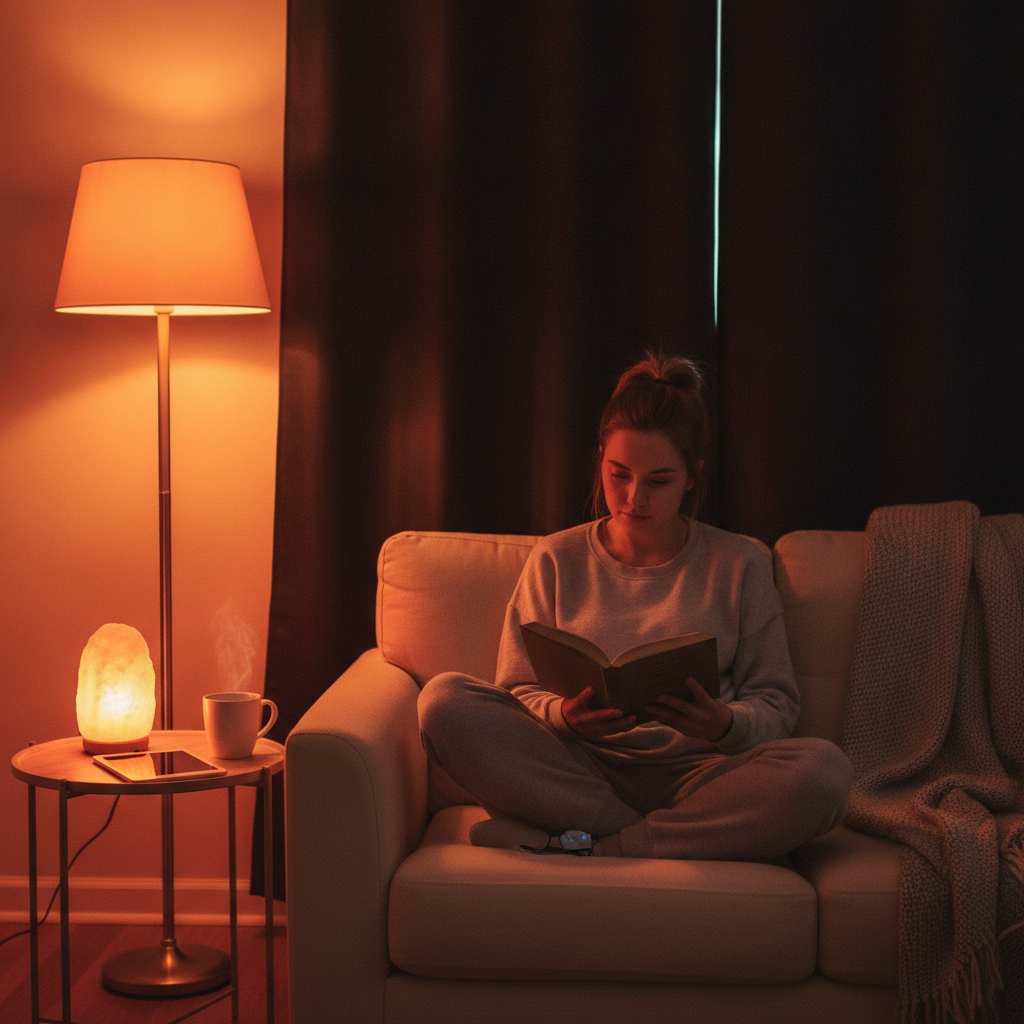
Overhead lighting tends to cast light across a wide angle, including upward into your eyes, which maximizes its alerting effect. Replacing overhead light use with floor lamps or table lamps positioned below eye level changes the geometry of exposure in a way your brain registers differently. Warm-toned bulbs in the 2700K range or lower are ideal for this purpose. Brands like GE and LIFX offer affordable warm-spectrum options that require no smart home setup — just a straightforward bulb swap that takes under a minute.
Managing Screens Without Eliminating Them Entirely
Few people are willing to give up screens entirely in the evening, and the research doesn't demand it. What matters more is how you use them. Reducing screen brightness to its lowest comfortable setting, enabling warm color modes, and holding devices at a greater distance all reduce the effective dose of light reaching your eyes. Wearing blue-light-filtering glasses from brands like Felix Gray during evening screen use adds another layer of reduction without requiring you to change your habits significantly.
Creating a Light Transition Ritual
The most effective light audits don't just change the environment — they build a consistent cue that signals the shift toward sleep. Choosing a specific time, say 9 p.m., to switch off overhead lights, warm your screen settings, and reduce brightness creates a repeatable transition that your body begins to anticipate. Over a week or two, this consistency reinforces your circadian rhythm, so your body starts preparing for sleep before you even lie down. The ritual doesn't need to be elaborate — the consistency is what does the work.
Keeping the Bedroom Itself as Dark as Possible
Once you're actually in bed, any remaining light continues to affect sleep quality even after you close your eyes. Charging indicator lights, standby LEDs on televisions, and light bleeding under the door all register through eyelids to some degree. Covering device LEDs with a small piece of electrical tape, using a door draft stopper, or simply moving devices to another room removes these residual inputs. A sleep mask is a practical backup when environmental changes aren't possible, and options from brands like Manta Sleep are shaped to avoid contact with eyelids, which many people find more comfortable for extended wear.
Small changes to your light environment tend to compound quickly. The first night of a warmer, dimmer pre-sleep hour might bring only modest improvement, but after a week of consistency, the difference in how quickly sleep arrives is often striking. You don't need to overhaul your entire home — start with one fixture, one screen setting, one small shift. The hour before bed is more powerful than most people give it credit for, and it's entirely within your control.