Clutter rarely arrives all at once. It builds in layers — a bag left on the kitchen counter, a package that never gets fully unpacked, a charger that lives on the floor because there's nowhere obvious to put it. Before long, surfaces disappear under objects that don't technically belong anywhere. The frustration is real, and the solution isn't more willpower. It's a simple structural shift: every object that enters your home needs a designated, physical place to return to.
This idea — sometimes called the "one home, one object" principle — is the foundation of most sustainable decluttering systems. When something has a clear home, putting it away becomes automatic. When it doesn't, even small decisions stack up into low-grade daily stress. The tips below walk you through how to build this habit room by room, starting from the moment something crosses your threshold.
Treat Your Entryway as the First Decision Point
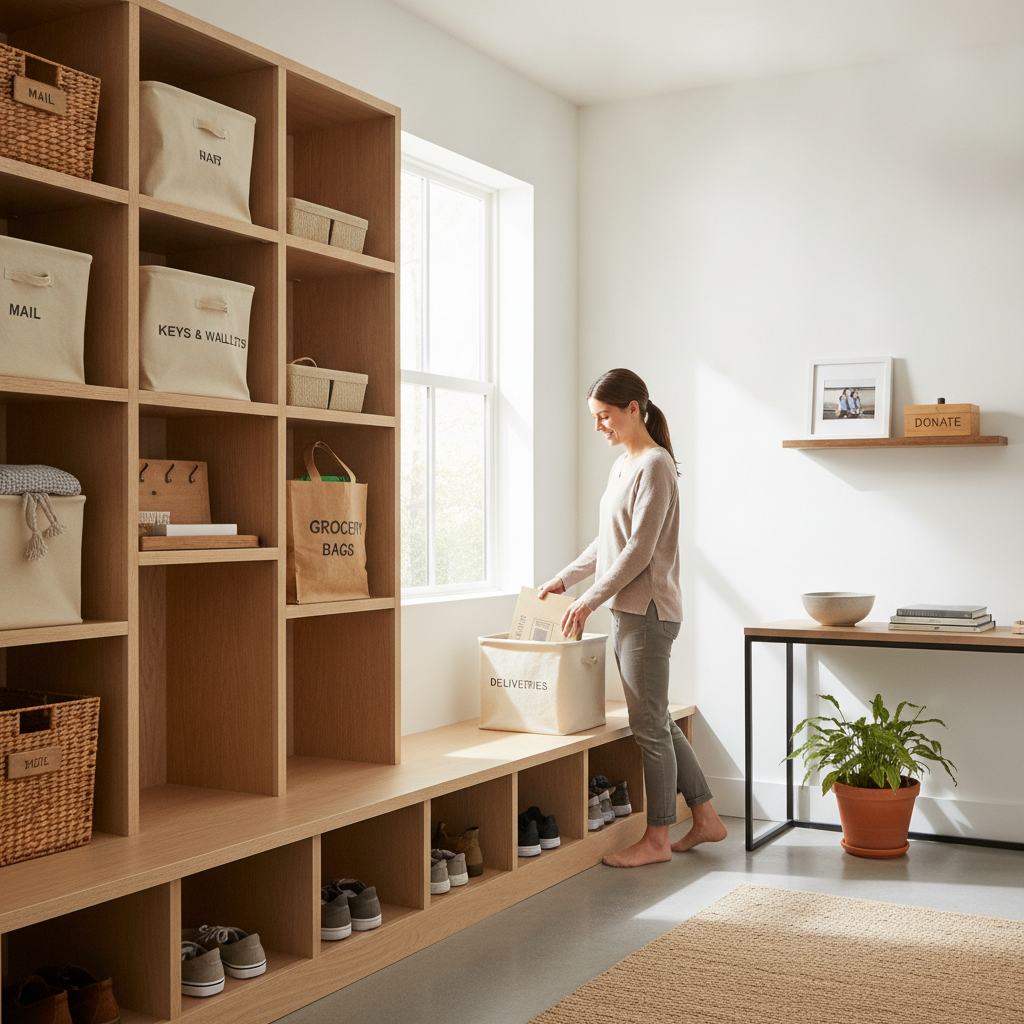
The front door is where clutter either gets caught or starts spreading. Setting up a dedicated landing zone — a small shelf, a row of hooks, a tray for keys and mail — gives every incoming item a place to pause before it goes deeper into the home. Products like the IKEA KALLAX shelf or a simple Command hook strip work well because they're visible and easy to use without thinking. When bags, coats, and daily essentials always return to the same spot, they stop migrating to the couch, the table, or the bedroom floor.
Unbox Purchases Completely Before Storing Them
One of the most overlooked clutter habits is the half-unpacked purchase. You bring something home, open the box to check it, and leave the packaging sitting around for days. Making it a rule to fully unbox, dispose of packaging, and find a home for the item immediately breaks this cycle. This works especially well for online orders, which tend to arrive in oversized boxes that take up visual space and make a room feel chaotic. Apps like Sortly can help you track where items end up if your home storage is spread across multiple rooms.
Define Zones Before You Buy Storage Products
Buying bins and baskets before deciding what goes where almost always backfires. The storage product becomes clutter itself. Instead, walk through each room and identify what categories of objects actually live there — cleaning supplies, craft materials, chargers, seasonal items. Then find or purchase storage that fits those specific categories. The Container Store's Elfa system and similar modular options work well because they're adjustable as your needs shift, rather than locking you into a fixed layout.
Use the "Last Seen" Rule for Frequently Misplaced Items
Certain objects — glasses, remotes, small tools, chargers — tend to wander because they get used in multiple locations and don't have a strong home base. Assigning one consistent storage spot and then reinforcing the habit with a simple rule helps: it always goes back to the same place after every use, not after you're done with it for the day. Some households use a small labeled tray in a central room. Others use a single drawer near the most common use location. The specific solution matters less than the consistency of applying it.
Set a One-In, One-Out Boundary for Specific Categories
For categories that tend to accumulate — books, kitchen gadgets, clothing, children's toys — a one-in, one-out policy prevents the slow fill-up that outpaces your storage. When a new item enters, one leaves. This doesn't need to be rigid or stressful; it works best as a gentle checkpoint rather than a rule you enforce with guilt. Platforms like Facebook Marketplace or ThredUp make it easy to move items out quickly, which removes the friction of letting something go when a replacement arrives.
Label Storage So Others Can Return Things Correctly
A designated home only works if everyone in the household knows where it is. Labeling — whether with a label maker, chalkboard tags, or simple masking tape — removes the ambiguity that leads to things being put "somewhere close" instead of the right place. This matters especially for shared spaces like kitchens, bathrooms, and storage closets. When family members or roommates can see clearly where something belongs, the system maintains itself instead of depending on one person to constantly reset it.
Schedule a Brief Weekly Reset to Catch Drift
Even the best systems experience drift. Objects get moved during busy days, guests leave things in odd spots, and small exceptions accumulate over a week. A ten-to-fifteen minute weekly reset — walking through each room and returning displaced items to their homes — prevents that drift from becoming a full decluttering project. Pairing it with something low-effort, like a podcast or a playlist, makes it feel less like a chore. The goal isn't perfection mid-week; it's a reliable recovery point that keeps the system intact.
Create a Holding Zone for Items Without a Home Yet
Not every incoming object immediately has an obvious permanent place. Rather than letting these items scatter, designate a single temporary holding zone — one basket, one shelf, one box — where unassigned items wait until you decide where they belong. The rule is that nothing stays in the holding zone indefinitely; a weekly or biweekly check clears it out. This approach gives you flexibility without letting ambiguity spread through the whole house. It contains the problem while you solve it at your own pace.
Building a system of physical homes for your belongings doesn't require a weekend overhaul or a minimalist aesthetic. It's a series of small, deliberate decisions made consistently over time. Start with one room, assign homes for the objects that live there, and let the habit build outward. The payoff is a home that stays manageable not because you're constantly cleaning, but because everything already knows where it belongs.